
If you’re short on ground space to grow plants, go vertical
Words: Karen Booth
Green walls and vertical gardens offer a host of benefits. To begin with, they allow you to introduce plant life into small outdoor spaces. If you don’t have room for a ground-level garden, you can attach a garden to your courtyard wall or the exterior of your house. What’s more, they reduce the ambient temperature in their immediate surrounds, clean the air and encourage biodiversity, making them eco-friendly.
More of us are living in apartments and townhouses with just the tiniest of spaces to grow a garden, so it’s not a surprise that gardening on walls has become popular. Vertical gardens allow us to grow plants to brighten our lives or spice up our dinner plates, even when challenged for space.
Edible or ornamental
A vertical garden lends itself to a variety of uses and the plants you choose will depend on whether the garden is to be ornamental or edible. Plant selection will also be influenced by the amount of natural light the location receives, the microclimate and the plant’s inherent ability to thrive off the ground.
Wall gardens do have the advantage of keeping the roots of plants warmer in cold weather, so if you’re planning on planting herbs or salad vegetables, you can grow your basil for longer in autumn, for instance. Wall gardens are also a great way to keep invasive plants, such as mints, under control.
Of course, vertical gardens don’t have to be filled with edible plants. They can include succulents, bromeliads, tropical foliage plants and a variety of flowering species.
Planting suggestions
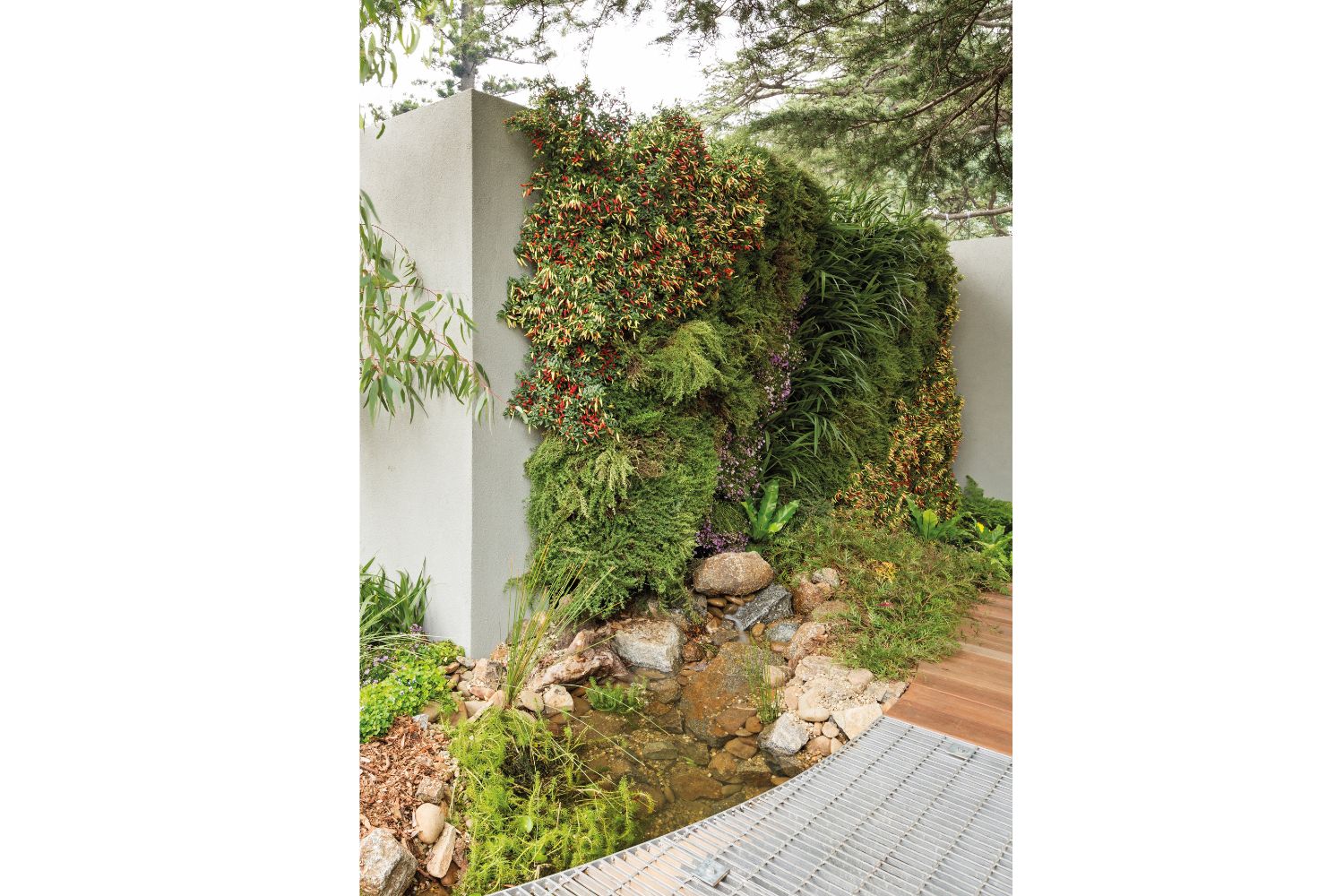
If the idea of a kitchen garden appeals, then hardy herbs such as thyme, sage, oregano and rosemary are perfect, especially for the upper part of your green wall as they don’t need as much water as other varieties. Golden marjoram, tarragon and chives are some other reliable options.
To create a decorative effect, succulents such as echeveria, sedum and crassula, can look incredible. If you’re not overly keen on a lot of maintenance, or live in a dry climate, then liriope and small hebe varieties can work well, depending on the microclimate. Plants with water-holding stems and leaves, such as begonia, pelargonium, peperomia and columnea, are also a good idea. Plants with water-holding roots, such as mondo grass and philodendron, are other great choices.
Custom or ready-made
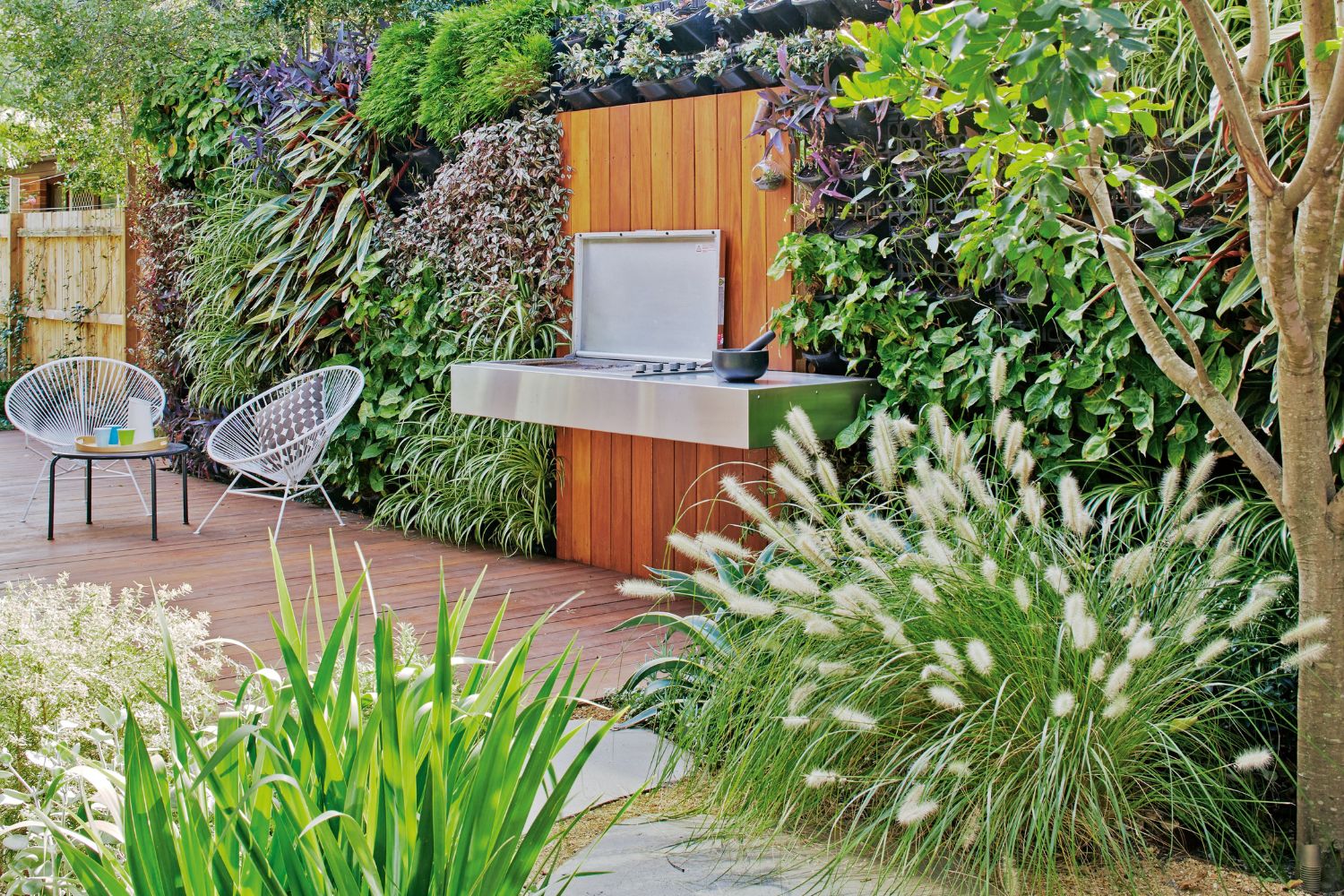
There are companies that specialise in the installation, planting and maintenance of customised green walls and vertical gardens. And many landscapers now have expertise in this arena too, so be sure to ask.
There are also many readily-available DIY systems, some of which feature a metal frame (either freestanding or wall-mounted) and hook-on pots. Then there are modular versions where the pots are already integrated into a screen that you attach to your wall. If you want something on a smaller scale, there are ready-to-hang fabric systems, such as Verti-Plant and Woolly Pockets. Of course, these are just a few examples of the diverse array of DIY vertical garden systems on offer.
The practicalities
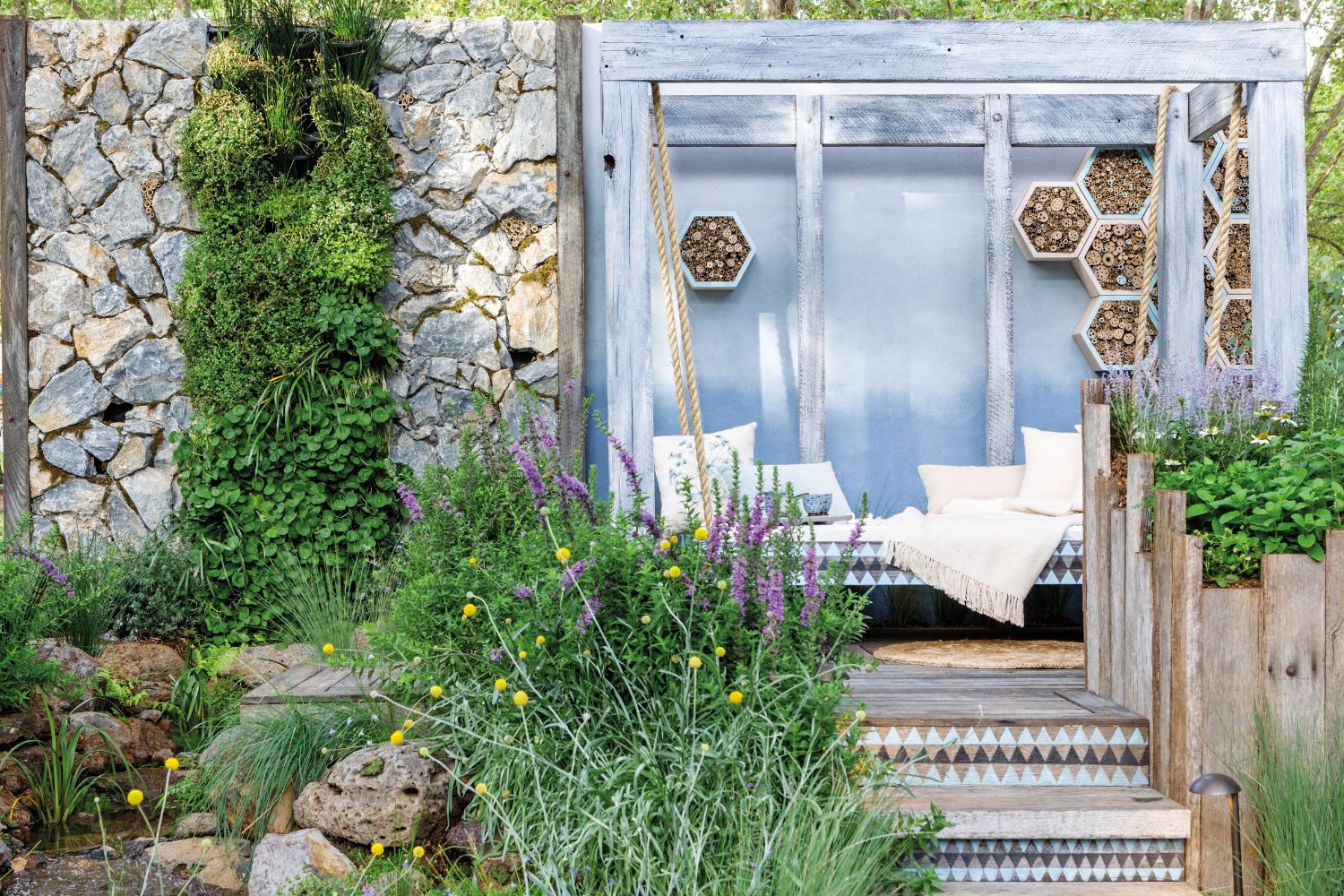
A vertical garden will need maintenance. In fact, it may need more than a conventional garden. A small vertical garden, a few pots in a frame or a simple fabric system, won’t require much more upkeep than a hanging plant would, but large customised green walls can be complex creations in need of a lot of nurturing, so may need expert care.
It’s not just the “after” you might need expert help with, however; especially if the goal is to establish a sizeable green wall on a deck, terrace or apartment balcony. You will need to determine if the wall and floor are able to bear the load (add water to plants and growing media, and things can get heavy). Also, is the wall waterproofed? Is the floor? Where will any water overflow go? But with planning and expert advice, vertical gardens are great space-saver.