
For years, modern garden design was dominated by straight lines. Square lawns, rectangular garden beds and perfectly parallel paths became the go-to look for new homes across Australia. Clean, structured and easy to plan, they suited the architecture of the time.
Today though, the trend is beginning to soften.
Landscape designers are moving towards gardens that feel more natural, more inviting and more connected to the environment around them. Instead of rigid corners and sharp edges, we’re seeing flowing pathways, curved garden beds, circular lawns and organic planting layouts becoming the centrepiece of Australian backyards.
It’s a subtle change, but one that can completely transform the way a garden looks and feels.
Curves naturally guide your eye through a landscape. Rather than drawing your attention from one point to another in a straight line, they encourage you to slow down and take in the entire space. A gently winding path invites you to explore, while a curved garden bed softens the transition between lawn, planting and entertaining areas.
The result is a garden that feels less formal and more relaxed.
One of the biggest advantages of incorporating curves into a landscape is that they work in almost any style of garden. Whether it’s a contemporary courtyard, a coastal retreat, a native landscape or a traditional family backyard, flowing lines help create a sense of balance without overwhelming the space.
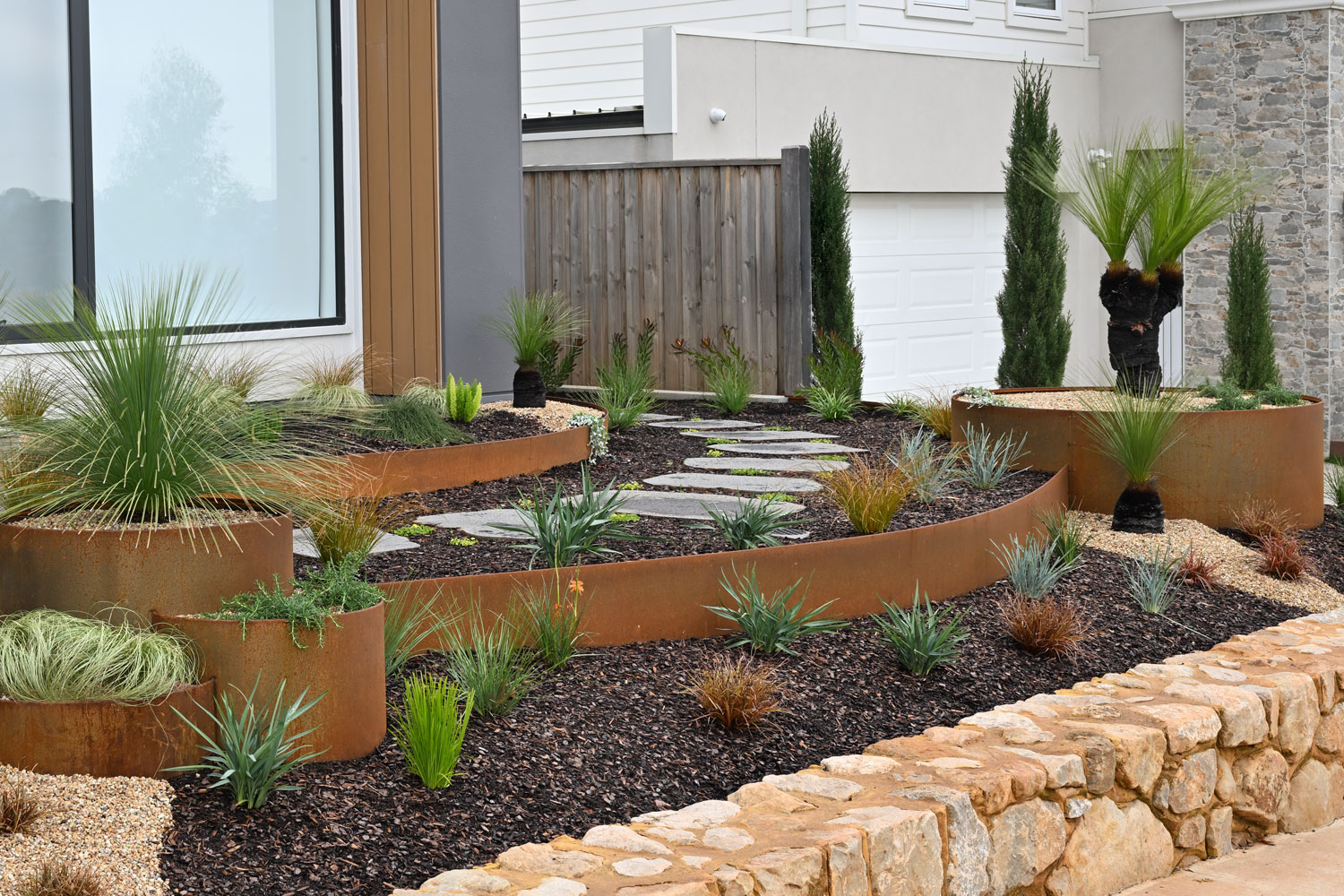
Curves can also make smaller gardens appear larger. Instead of seeing every corner at once, your eye follows the shape of the garden, creating a feeling of depth and discovery. It’s a design technique landscape professionals have been using for years, and one that’s becoming increasingly popular with homeowners looking to make the most of their outdoor space.
Of course, bringing those flowing curves to life requires products that are just as adaptable as the designs themselves.
Steel garden edging has become a favourite among landscape designers because it combines clean definition with the flexibility to create sweeping curves, gentle bends and flowing garden beds without sacrificing strength or durability.
At ShapeScaper, our modular steel edging is manufactured in standard 2400mm lengths, with the most popular profile heights easily curved by hand on site during installation. This allows landscapers to create everything from gentle sweeping curves and winding pathways to circular lawns, rounded garden beds and feature trees with ease, giving designers the freedom to move away from rigid geometric layouts without the need for complex installation techniques.
Most projects can be achieved using our standard modular system alone. However, every now and then a project comes along that pushes the boundaries. A particularly tight radius, an unusual design or a feature that simply can’t be achieved by hand, this may call for something custom. Because we design and manufacture here in Australia, we’re able to fabricate project-specific solutions when required, helping landscape contractors and designers bring even the most ambitious ideas to life.
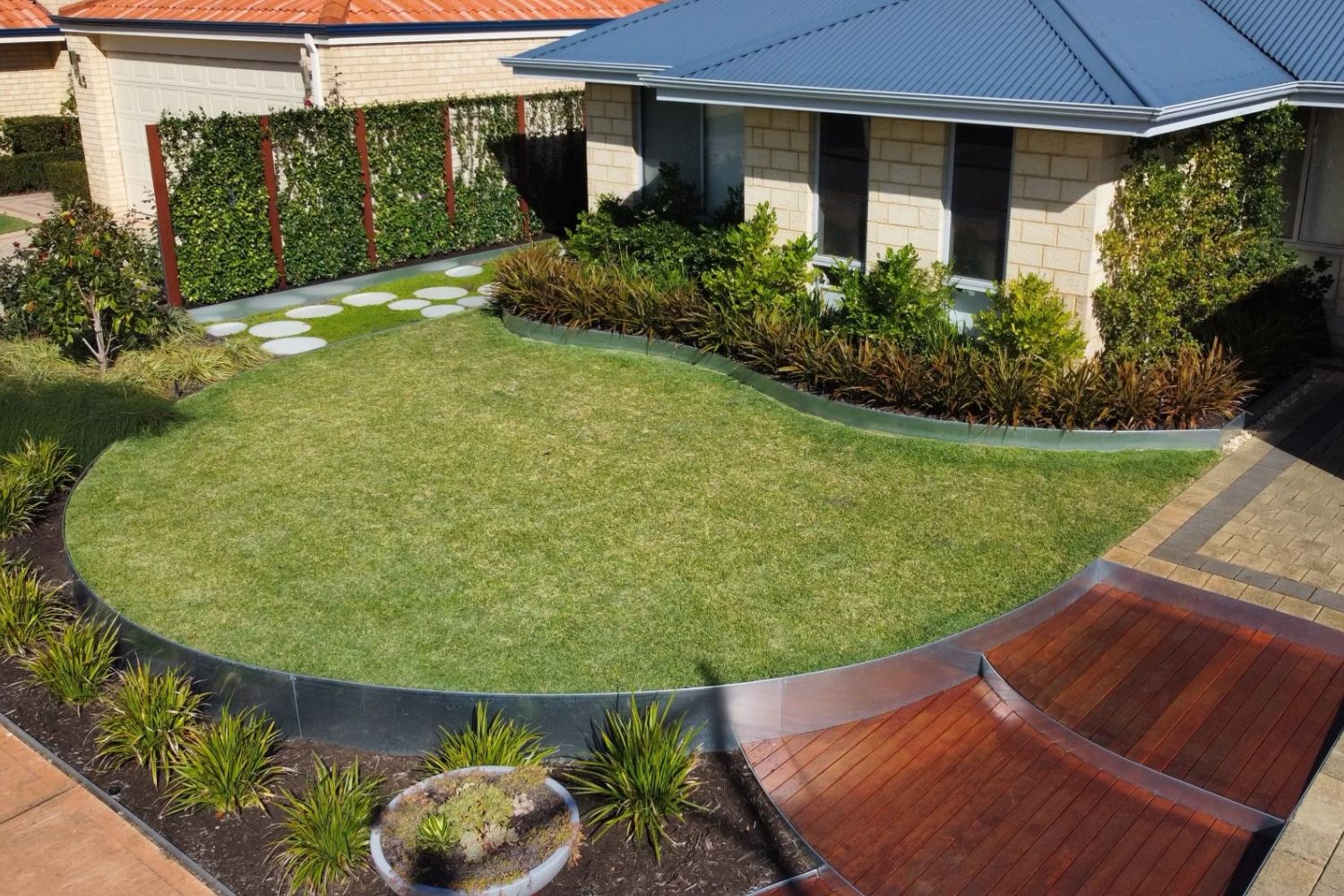
Curves aren’t just changing the shape of garden beds either. They’re influencing the way entire outdoor spaces are designed. Circular planter rings create striking focal points around feature trees, sweeping edging defines entertaining zones without hard boundaries, and gentle curves help connect different parts of the landscape into one cohesive design.
Perhaps that’s why curved landscapes feel so timeless.
Unlike many garden trends that come and go, curves are inspired by nature itself. Rivers don’t flow in straight lines, trees don’t grow in perfect squares and rolling hills aren’t made up of right angles. By borrowing those natural forms, a garden feels more settled, more balanced and more comfortable to spend time in.
The best part is that introducing curves doesn’t necessarily require a complete garden makeover. Sometimes a single curved garden bed, a flowing pathway or a circular planter is enough to soften an entire outdoor space and create a completely different feel.
Straight lines will always have their place in landscape design. But as Australian gardens continue to evolve, it’s the softer, flowing lines that are shaping the outdoor spaces people love spending time in.
Because sometimes the biggest transformation doesn’t come from adding more to a garden.
It comes from changing the lines that tie it all together.
Last articles: