With the latest fittings and fixtures, you can create an eco-conscious bathroom with all the convenience and comfort of a wellness retreat
Words Karen Booth
Smart, sustainable and serene … this is how we like our bathrooms. We want eco-conscious, healthy spaces that enhance wellbeing and offer personalised comfort and convenience. From tapware to toilets, basins to bathtubs, advances in technology and the use of environmentally friendly materials have led to a proliferation of beautifully designed fittings and fixtures that save water, reduce energy consumption, or use smart tech to offer a customised experience.
“Today the goal is to transform bathrooms into a soothing, organic sanctuary – a space of calm and indulgence,” says Linda Soto, bathroom category manager at e&s Trading. “Warm, organic modernism is leading the way, with many new fittings and fixtures defined by soft, non-symmetrical shapes, gentle curves, and grooves that create visual smoothness. It’s all about tactile pleasure. Think layers of indulgence and a commitment to eco-friendly materials.”
It’s also about using smart tech to craft wellness retreats that cater for differing needs. It might be smart lighting that changes in colour and intensity, a smart shower that plays music and lets you pre-program water temperature and pressure, or even a smart tech mirror that gives you news and weather updates.

Tapware innovations
“The latest tech innovations in bathroom fixtures are putting health, safety and sustainability at the forefront,” says Linda. “Lead-free tapware is a prime example. As of May 1 this year, the National Construction Code’s new limit for the allowable level of lead in plumbing products used for drinking water comes into effect. This critical shift prevents lead from leaching into your water supply, avoiding the potential health risks associated with lead consumption and ensuring water purity.”
To ensure you’re buying compliant tapware, look for the new Watermark logo, consisting of the Watermark “W” logo and the words “Lead Free” underneath.
Water- and energy-saving technology continues to advance, with one of the most recent innovations being the cold start mixer tap. “Traditional mixers activate the hot water system, even for a quick rinse. The cold start tap starts in the cold position, preventing the hot water system from heating water unnecessarily for small tasks. This results in reduced energy consumption, leading to lower utility bills and a smaller environmental footprint,” says Linda.
For those looking for ease of use and greater control, the choices are legion. One example is the Astra Walker Wall Set with Volume Control Mixer, which has a single handle for adjusting temperature and pressure. And for the health-conscious, there are ranges such as the Pure Collection from Nero Tapware made entirely from the highest-grade 316L stainless steel, which is naturally lead-free and non-toxic.

Vibing with vanities
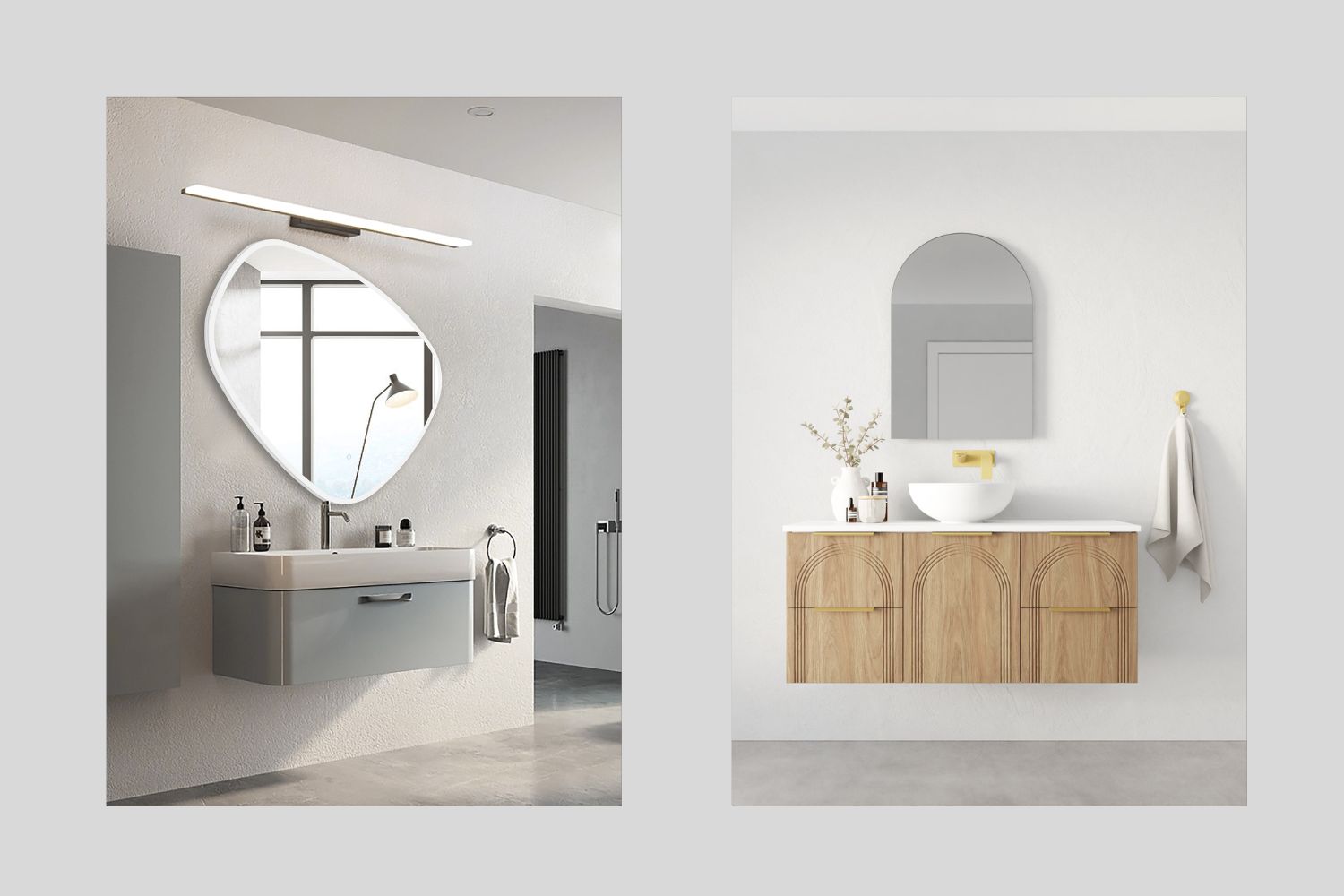
“Floating or wall-hung vanities continue to define modern bathroom design. They visually open up the room and work well with integrated lighting – from back-lit mirrors to concealed illumination under the cabinet – which adds both ambience and everyday practicality,” says Christie Wood, design specialist at Beaumont Tiles.
“Materiality is playing a much stronger role,” she continues. “Warm timbers, fluted or ribbed textures, mixed-material combinations and subtle metal accents in brushed gold or copper are all featuring prominently. Modular sizing is also influencing choice, with many brands offering customisable widths, depths and internal configurations. This allows people to tailor storage, drawer layouts and even tech integration to suit how they use the space.
“For longevity, features such as moisture-resistant board and high-quality hardware from brands like Timberline are becoming non-negotiable. Australian families expect vanities that stand up to daily use while still feeling elevated.”
Vanities featuring thermolaminated doors, drawers and panels are the preferred choice for many, offering a seamless finish, a choice of flat-face or routered profiles, and enhanced moisture-resistance.

New-look basins
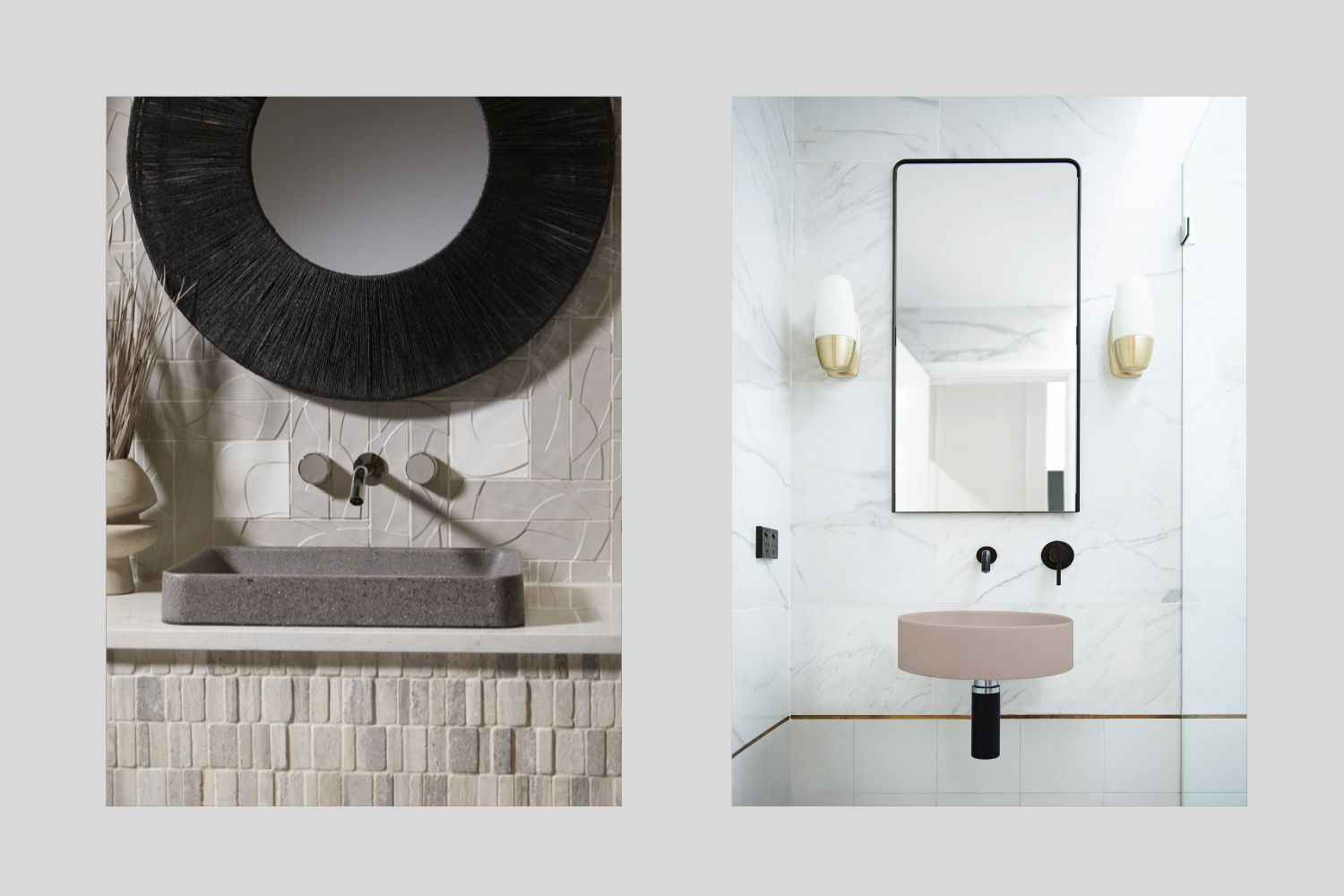
“When it comes to basins, we’re seeing homeowners move beyond traditional ceramic towards more architectural materials – particularly stone composite and concrete. These finishes offer greater depth of tone, improved durability, and a more sculptural presence on the benchtop,” says Christie.
“Colour is another clear shift and again, stone composite and concrete basins are leading the charge. Matt, earthy hues are replacing bright whites, while designers are experimenting with bolder statements in coloured concrete. The overall effect is still refined, but with a sense of warmth and individuality.”

Concrete basins, with their textured finish, are handcrafted so no two will be exactly the same, and while they come sealed, they will need resealing at some point. Some concrete basins also achieve a high level of sustainability. The Nood Co range of basins is made from Ultra High Performance Concrete that includes recycled materials, uses around 96 percent
less energy to create than its ceramic counter-part, and can be recycled at the end of the basin’s lifespan.
“Integrated basins are also gaining momentum,” adds Christie. “By forming the bowl as part of the countertop, you reduce visible joins and create a very clean, minimal line.” Solid-surface, silica-free materials like Staron are ideal for this, while bathroomware brands such as Omvivo offer a raft of solid-surface integrated basins and vanity tops.

The shower experience
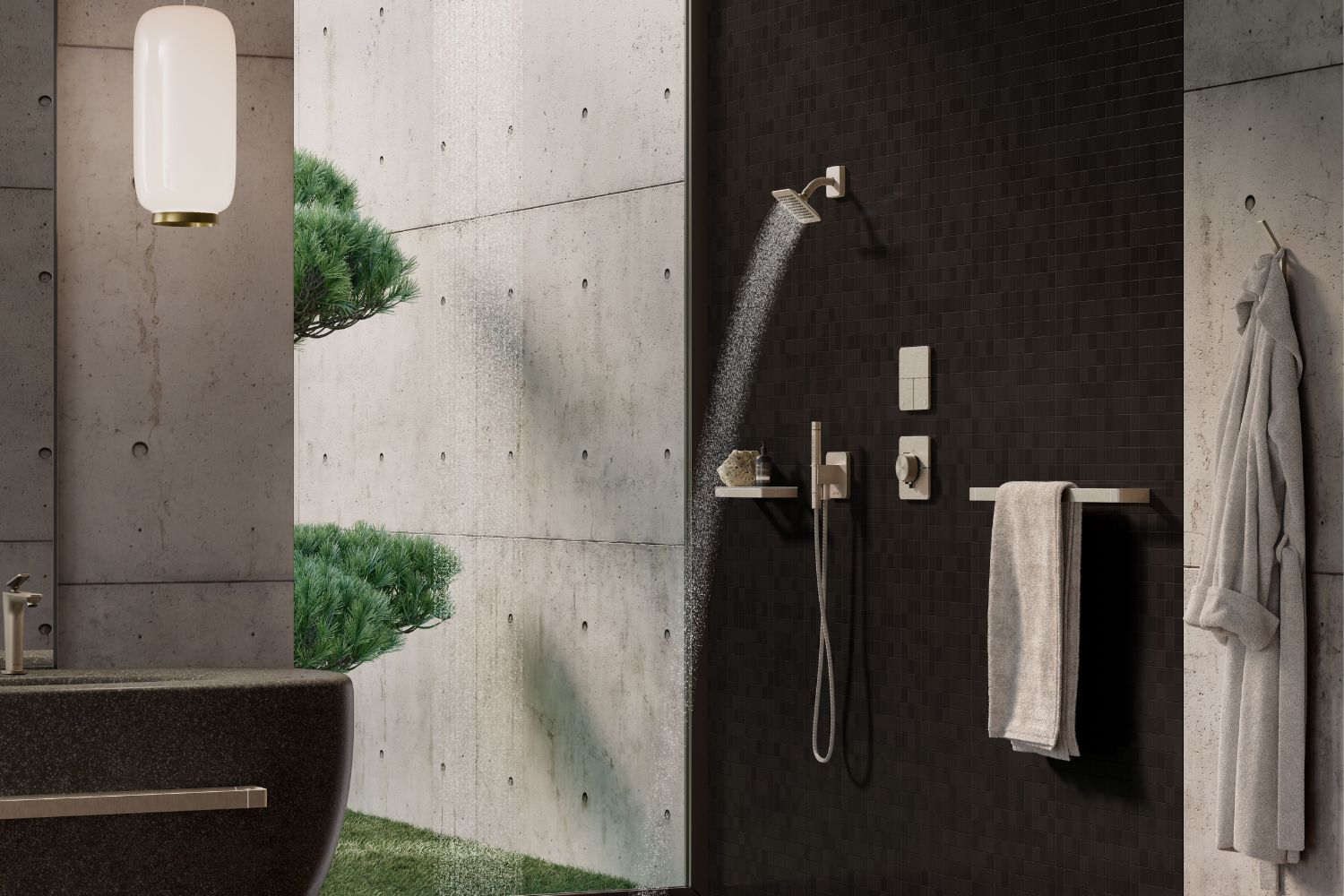
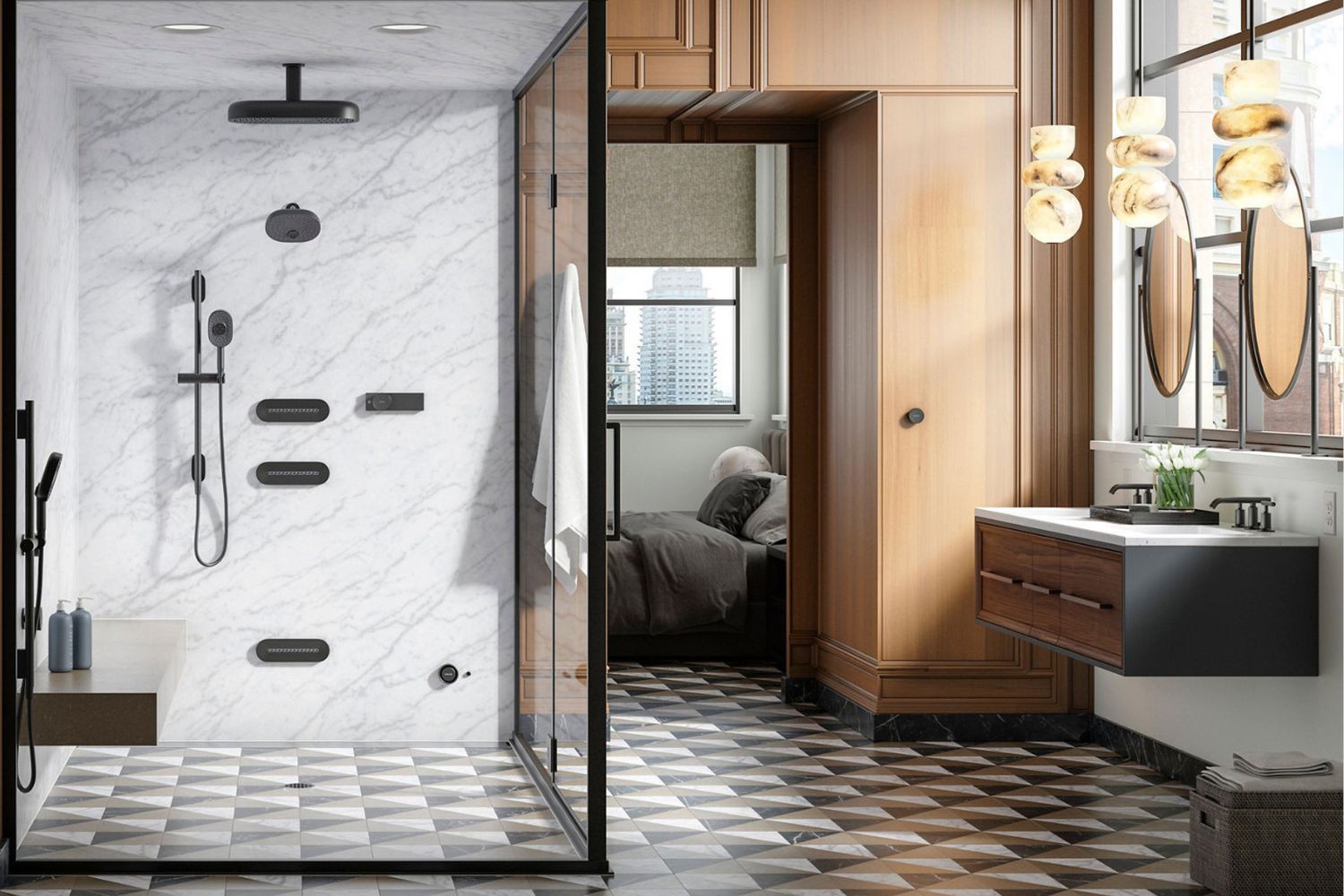
Today, most of us want a spa-like experience and the shower is central to that. It could be a steam shower to ease the tension after a hectic working day, or perhaps a rejuvenating rainfall showerhead. You want to enjoy a little luxury, so indulge yourself and choose quality design and construction. Also look for flexibility. You might opt for a single showerhead such as the eco-smart Axor ShowerSphere overhead shower with its generous, angle-adjustable rain spray. Or you might mix and match from a collection such as Axor Citterio C and combine an enveloping rainfall ceiling-integrated overhead jet with the arced flow of a wall-mounted overhead jet and the precise spray of a hand-held shower.

For the ultimate multi-sensory showering experience, you might opt for an integrated digital system that controls not just water and steam, but sound and light, from the one platform. New from Kohler, the Anthem+ uses a single digital interface to provide control and personalisation over a combination of shower sprays, rain heads, showerheads, hand showers and body sprays. You can mix and match settings and program up to 10 favourite pre-sets. Depending on the system, you can control up to 12 outlets.
If you don’t want to go the whole “bells and whistles” approach, you can achieve reliable temperature control with a thermostatic shower mixer, ensuring your comfort and saving water and energy. “Thermostatic shower mixers previously only used in aged care and hospitals are now accessible for the family home. Historically, the cost of certification in Australia meant there were few options on the market for the homeowner. Now there are many affordable options,” says Linda.
“Your pre-selected water temperature remains constant for the duration of your shower, eliminating the risk of scalding from sudden temperature spikes and preventing unpleasant cold shocks, leaving you to relax and enjoy your shower.”
It’s tub time
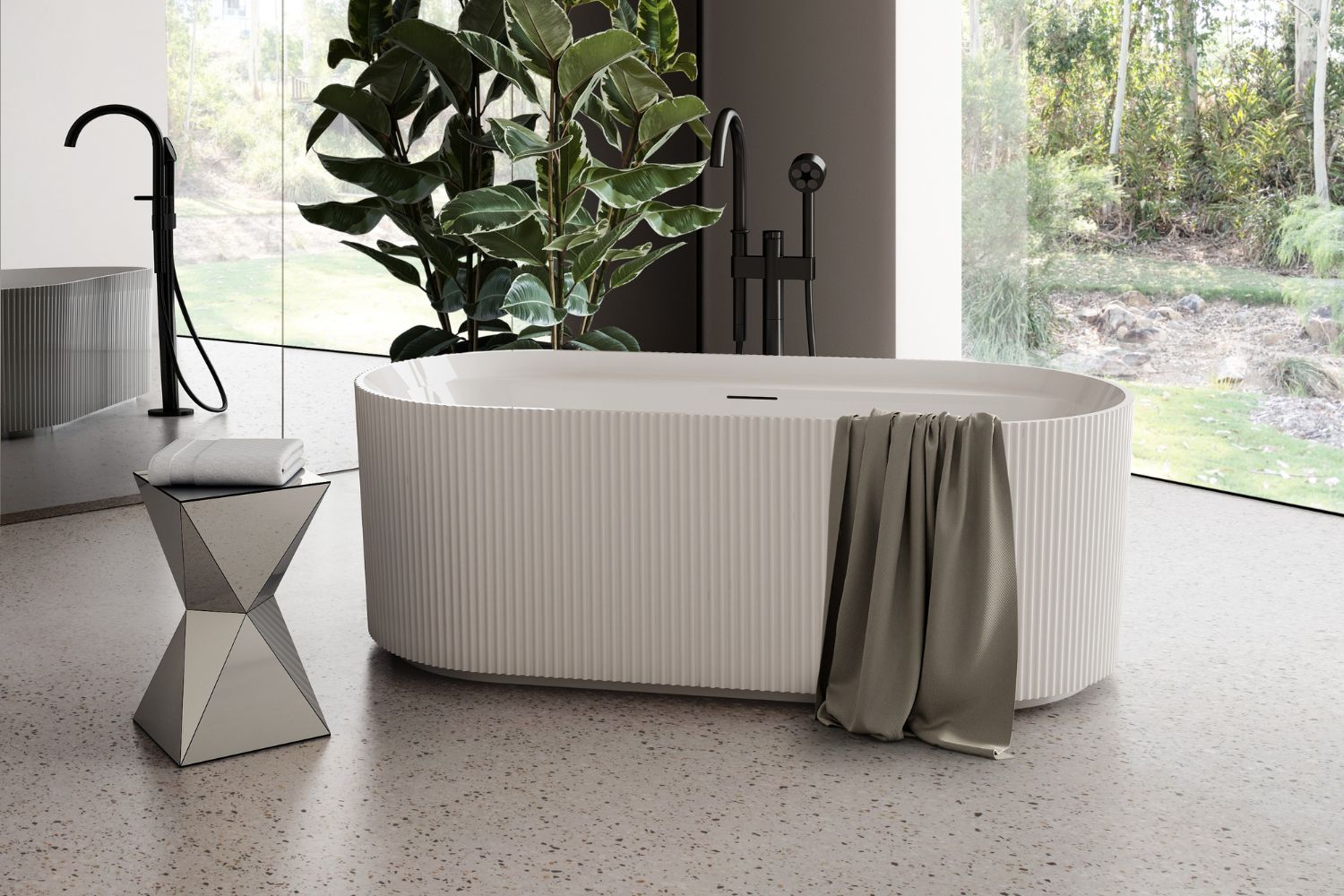
“Freestanding baths have really shifted from functional fixtures to statement pieces. We’re seeing a strong focus on form – sculptural silhouettes that act almost as art within the room,” says Christie. “Material innovation is driving much of this. Stone composite, solid surface and concrete baths all offer a more tactile, substantial feel. They also align with the rise of wellness-oriented bathroom design, where thermal performance, comfort and an immersive atmosphere matter.
“Colour and texture are also expanding. While white remains timeless, we’re seeing an increased appetite for coloured baths, tonal exterior finishes and fluted textures. Our new Tuscan-toned concrete bath, Jada, and our stone composite fluted designs respond directly to this shift.”
Decina’s new freestanding oval-shaped Viva bath is an example of a solid surface bath. It features a fluted outer shell, reclining lumbar support, an internal shelf for a glass of wine or bath-time essentials, and the latest in overflow technology.
Ambient or directional lighting around the bath can further reinforce the sense of retreat and add to the sculptural effect. Pair your freestanding tub with a sleek, elegantly curved floor-mounted bath mixer.
Light your way
Offering energy efficiency, longevity and design versatility, integrated LED strip lighting is making its presence felt in the bathroom. It can be incorporated into mirrors, vanities, shaving cabinets and shelving … even shower niches. LED light fixtures, from wall sconces to pendants, are also front and centre, adding designer chic. A soft white LED bulb is ideal for the bathroom, offering clarity without being harsh.
For ultimate ease and personalisation, use smart lighting controls that allow you, via mobile apps or voice commands, to activate motion sensor functions, change the colour temperature, dim the lights, set lighting schedules, or adjust the light output depending on the natural lighting conditions, thereby saving on electricity.
A popular option is the backlit mirror, which creates a diffused lighting effect and minimises shadows. One of the newest options is the Dyno side-lit mirror from Arcisan. Boasting an on-trend organic shape, the edge lighting uses the latest LED technology for long life, low electricity usage, and an even spread of light. A touch switch allows you to adjust the light intensity and operate the demister. You can also find shaving cabinets that incorporate lighting.
Hi-tech toilets
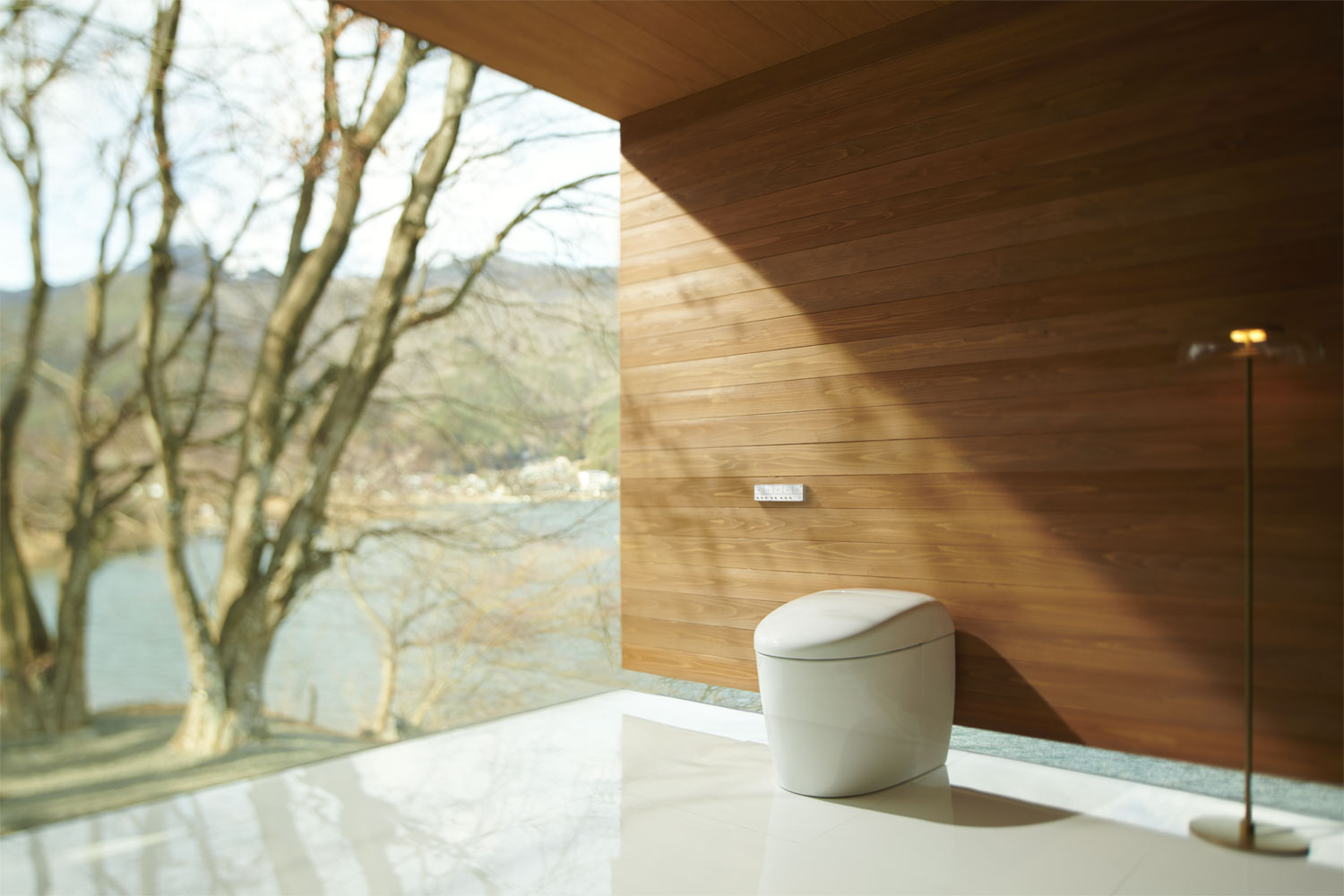
Smart toilets offer enhanced comfort, convenience, customisation and cleanliness. Heated seats, odour-eliminating systems, automatic flush volume management, personalised user settings, auto opening lids, welcome lights … these are just some of the possible features.

“Smart toilets continue to drive innovation as they become more accessible in the Australian market. Most bathroom brands are creating a variation, which means they are now accessible to most budgets and the aesthetic is more in keeping with Australian design preferences,” says Linda. “Most smart toilets have a water-saving feature that uses less water for liquid waste. This is not only better for the planet, it’s great for your water bills. And for those who find cleaning the toilet a thankless job, many smart toilets come with a self-cleaning and deodorising feature.”
One of the newest offerings on the local market, the Neorest RS Luxurious Smart Toilet by Toto has, among other features, a water-saving Hydro Ecology System, heated seat with temperature control, an auto deodoriser, Auto Soft light function for night-time use, adjustable warm air drying, and Ewater+, which sanitises the toilet bowl and nozzle.
Materials matter
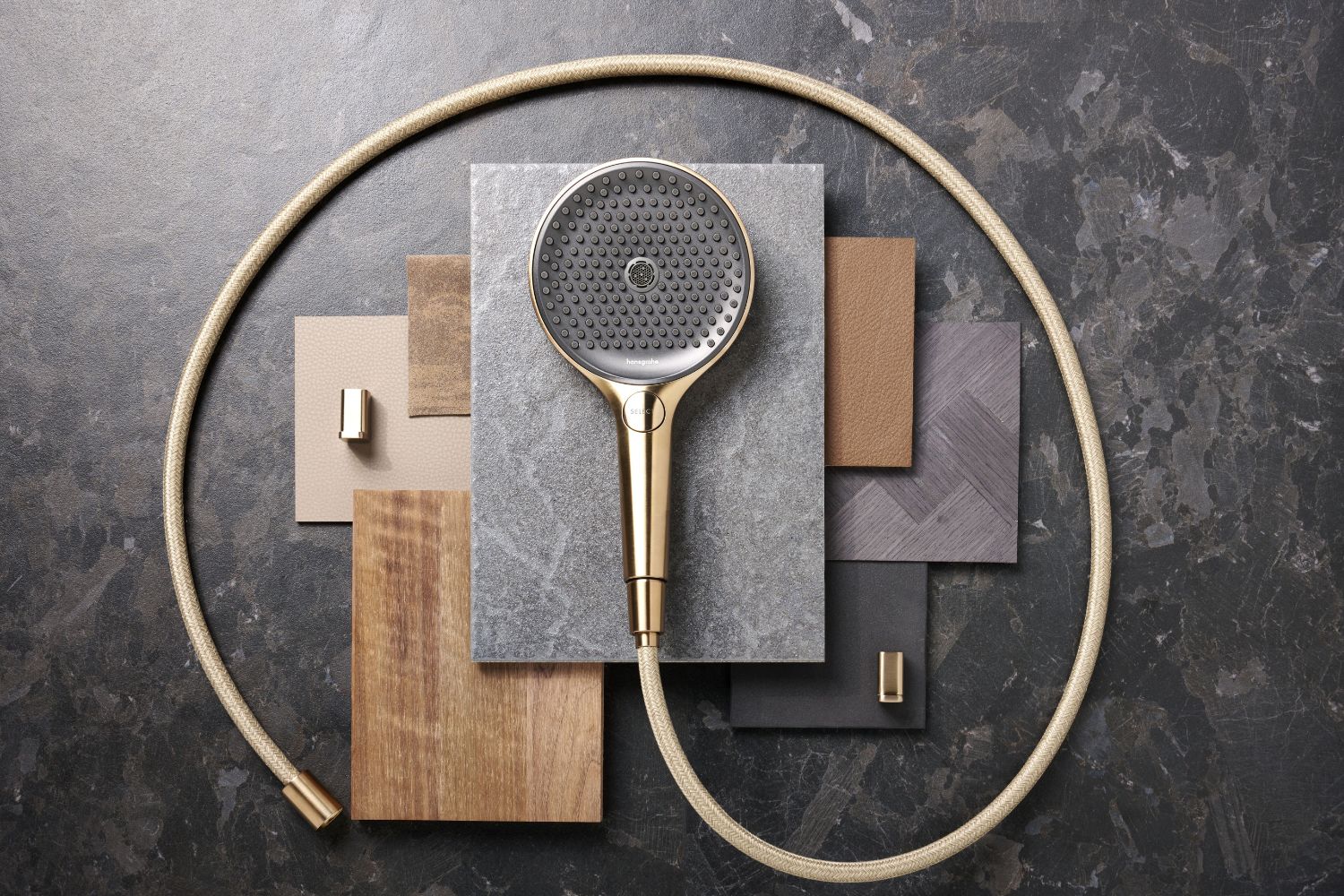
When searching for fittings and fixtures, keep an eye out for products that are made from recycled materials. Options include Hansgrohe’s Designflex shower hose, made from recycled plastic bottles and featuring a fabric-like braiding that resonates with the current design trend for tactile finishes. Also from Hansgrohe, the Planet Edition Pulsify hand shower boasts a handle made from recycled plastic.
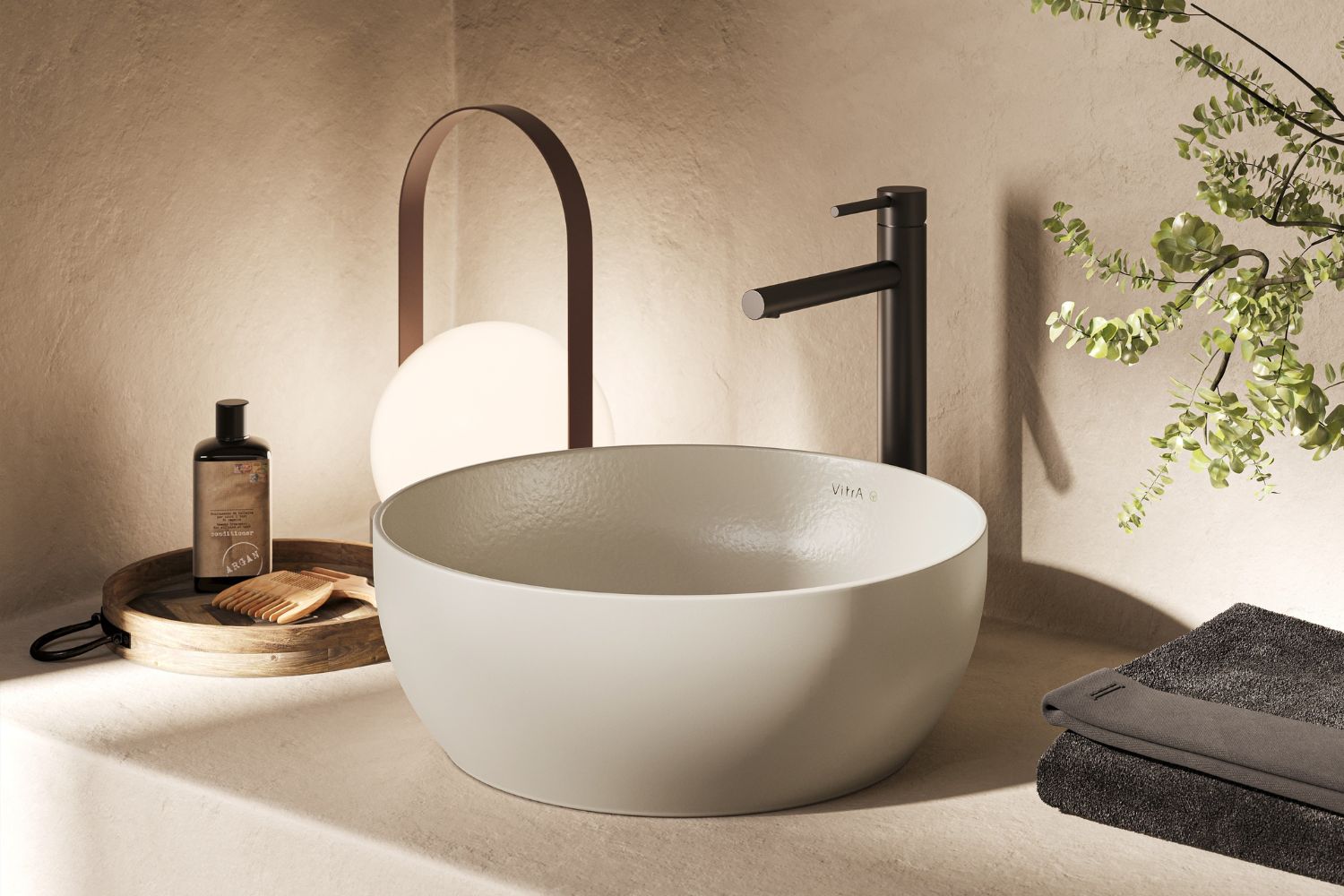
Overseas manufacturers are leading the way with basins. New from Kohler is the handcrafted WasteLab Vox vessel sink. It has the look of natural stone but is made with 70 percent recycled ceramic and cast-iron factory waste, using material that would have been destined for landfill, while VitrA’s Recycled Washbasin is made from close to 100 percent recycled ceramic waste. Back in Australia, Eight Quarters Terrazzo basins are made using recycled stone and marble chips.
Brands such as Sussex Tapware and Nero Tapware feature ranges manufactured using recycled brass, and for those who love a long soak, the Kohler enamelled cast-iron bath collection is crafted using at least 80 percent recycled scrap metal.
Also consider products and materials that can be recycled at the end of their lifespan, such as the Sustano from Duravit, the first recyclable shower tray. By paying attention to materials, and integrating the latest technology, you can create a luxurious bathroom that is a haven of wellness, and kinder to the planet.
This article was originally published in Kitchens & Bathrooms Quarterly 32.3.