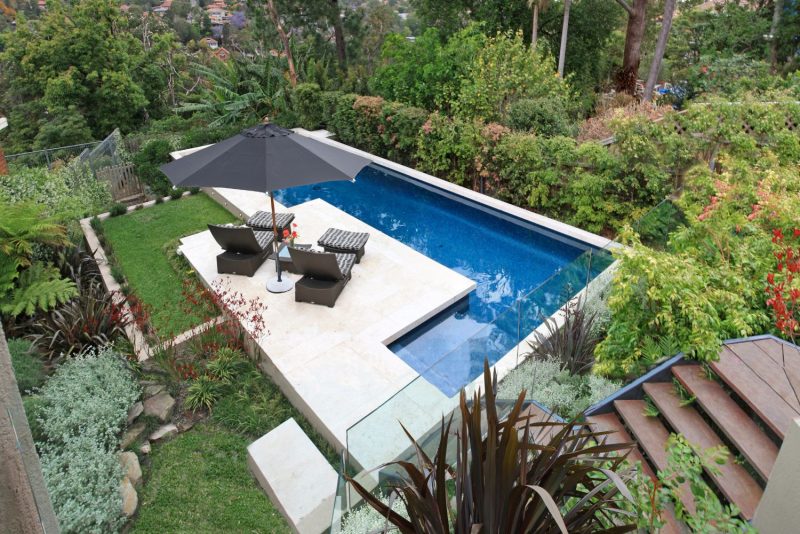
Designing secluded and tranquil outdoor spaces
Written with John Storch from A Total Concept
Creating a successful pool and poolside entertaining area requires a holistic approach. The space should be inviting, comfortable and private — an oasis where family and friends can gather for swimming and relaxation. Achieving a sense of seclusion and tranquillity involves thoughtful design choices, from screening inward views to incorporating sound barriers, ensuring ultimate comfort and enjoyment.
Assessing The Space
Before installing a swimming pool, it’s essential to analyse the area carefully. Physical factors such as orientation (north-facing aspects), prevailing winds, sun and shade requirements, and outward views all play a role. However, other considerations, such as noisy neighbours, nearby traffic, and potential privacy concerns are just as important.
To create a truly peaceful environment, the principle of “if you can’t hear or see them, they can’t hear or see you” is a useful guideline.
Visual Privacy
Most people prefer not to be on display while swimming, entertaining, or simply unwinding poolside. Thoughtful landscaping, fencing, and strategic placement of structures can help create a secluded sanctuary.
Aural Privacy
Noise pollution from neighbouring properties or busy roads can disrupt the serenity of an outdoor space. Aural privacy can be achieved through two main strategies: creating “white noise” to mask unwanted sounds or constructing physical acoustic barriers.
Enhancing Privacy with Design Elements
There are several ways to ensure both visual and aural privacy in a poolside setting. The following elements can be incorporated to create a tranquil and stylish retreat.
Lush Greenery
Landscaping plays a key role in designing a secluded pool area. Plants not only soften harsh lines and integrate the pool with the surrounding garden, they also provide natural privacy screening. When selecting plants, it’s important to consider maintenance and practicality.

Some key points to keep in mind:
- Choose dense, tall plants for privacy screening.
- Opt for low-maintenance species to minimise upkeep.\
- Avoid shedding trees like eucalypts, which can clog pool filters.
- Be mindful of bee-attracting plants and those with thorns, especially in spaces frequented
by children.
For a more organic aesthetic, a mixed border of evergreen shrubs, small trees, and palms can replace a traditional hedge. Climbers on trellises, walls or pergolas can also enhance privacy while adding a decorative element.
The Power of White Noise
Plants can contribute to aural privacy by generating natural sounds. Bamboo, for example, creates a gentle rustling in the wind, while tall grasses provide a soothing “swooshing” effect. Water features, such as trickling fountains or Japanese shishi-odoshi (deer scarers), are another excellent way to mask unwanted noise while enhancing ambience.
Fencing and Walls: Functional and Stylish
The phrase “good fences make good neighbours” is particularly relevant in poolside design. Even in the friendliest neighbourhoods, privacy is essential for creating a relaxing outdoor retreat.
Fencing for Privacy and Safety
Pool fencing is a legal requirement in Australia, but it can also be a stylish addition to the landscape. Choosing the right fencing material and design ensures both security and aesthetic harmony. To enhance privacy, consider:
Some key points to keep in mind:
- Installing solid fencing made from masonry, timber, or fibrous cement sheeting for acoustic control.
- Using decorative screens or integrating climbing plants to soften harsh fencing lines.
- Opting for black fencing to make surrounding greenery pop.
Most boundary fences are restricted to 1.8m in height, but positioning an additional fence slightly inside the boundary may allow for greater height and improved privacy.
Walls and Acoustic Barriers
Denser materials provide better sound insulation. Solid fences combined with acoustic sheeting or foam panels (often used in sound studios) can significantly reduce external noise, creating a more serene environment.
Incorporating Pergolas, Cabanas and Screens
Structural elements such as pergolas, cabanas and privacy screens add both function and style to a pool area. These features:
Some key points to keep in mind:
- Provide shade and additional lounging areas.
- Act as visual and acoustic barriers.
- Enhance the overall aesthetic appeal of the space.
Incorporating screens into the pool’s design — such as privacy walls that extend from the pool’s structure — can create a striking architectural feature. Materials like timber, metal or mirrored surfaces can be used to create a secluded retreat.
Final touches for tranquillity: Water features, wind chimes and ambient sounds
From simple ponds to elaborate waterfall designs, water features serve as both visual focal points and noise-masking solutions. The sound of moving water can enhance relaxation while minimising external distractions.
Adding wind chimes to the poolside area can introduce a soothing background sound, contributing to an overall sense of serenity.
The Ultimate Outdoor Sanctuary
A well-planned landscape design incorporating both visual and aural privacy will not only enhance the enjoyment of an outdoor pool area, but also add value to the property. By thoughtfully integrating plants, fencing, structural elements and water features, homeowners can create a luxurious and secluded retreat, ensuring both style and seclusion in their own private oasis.


