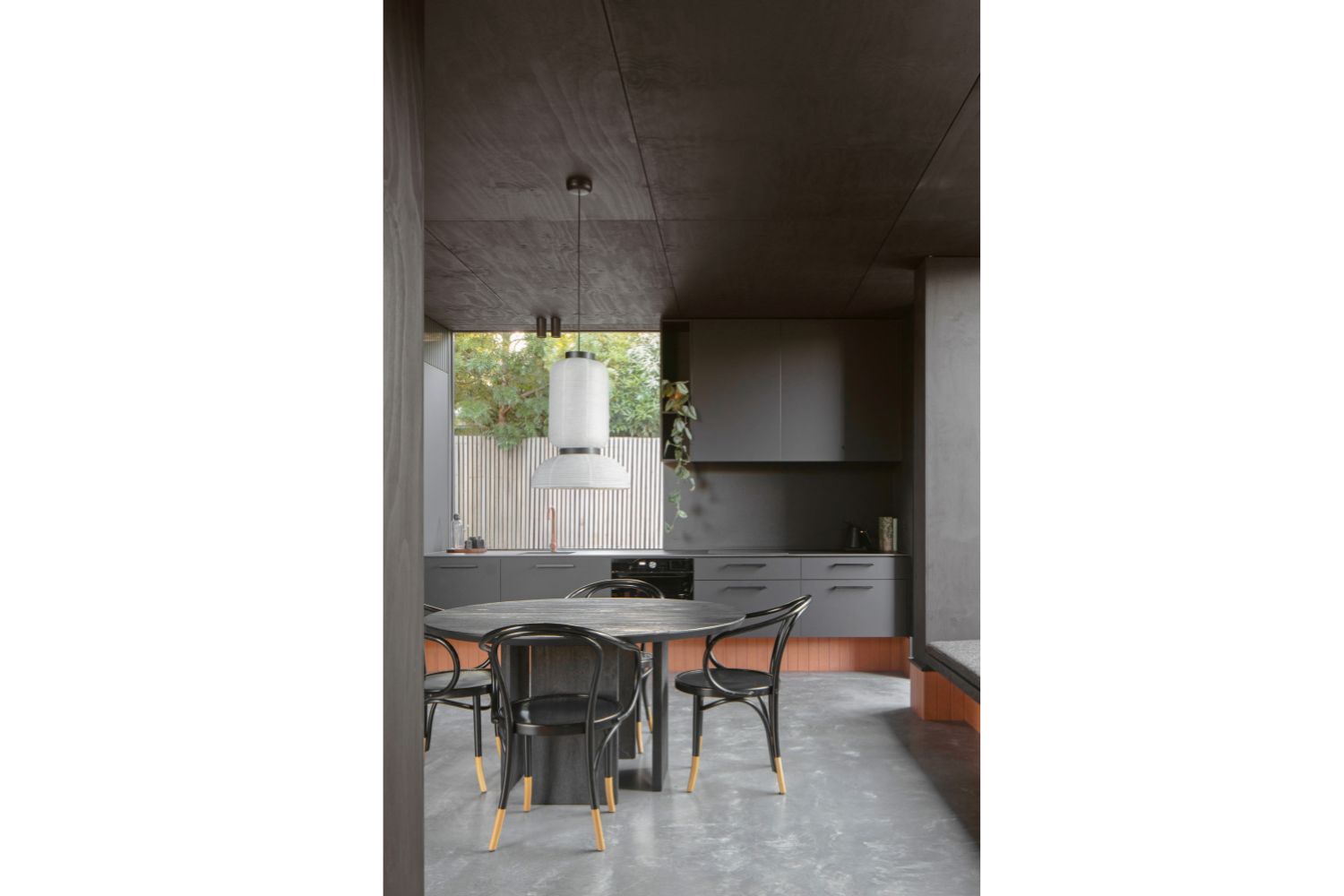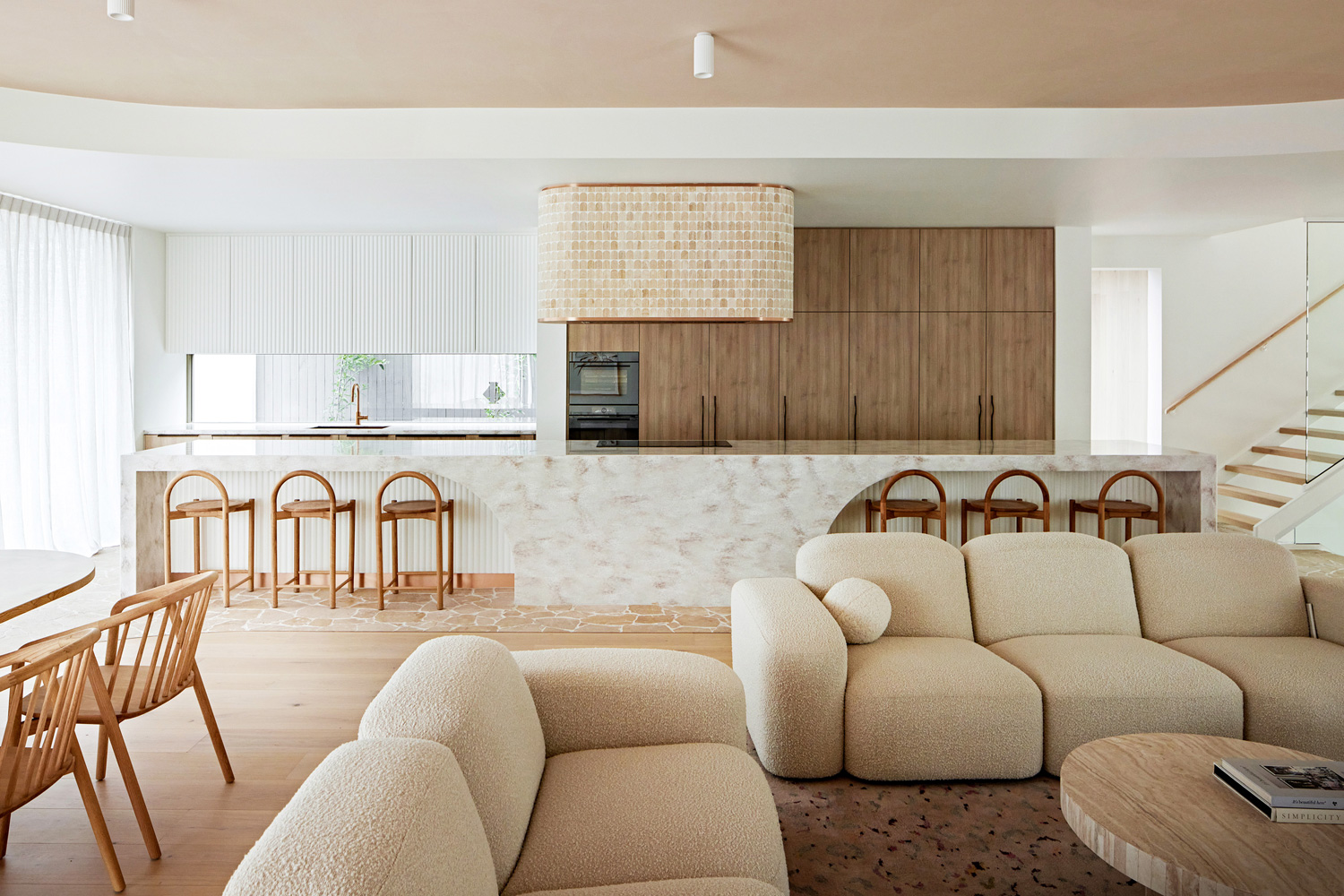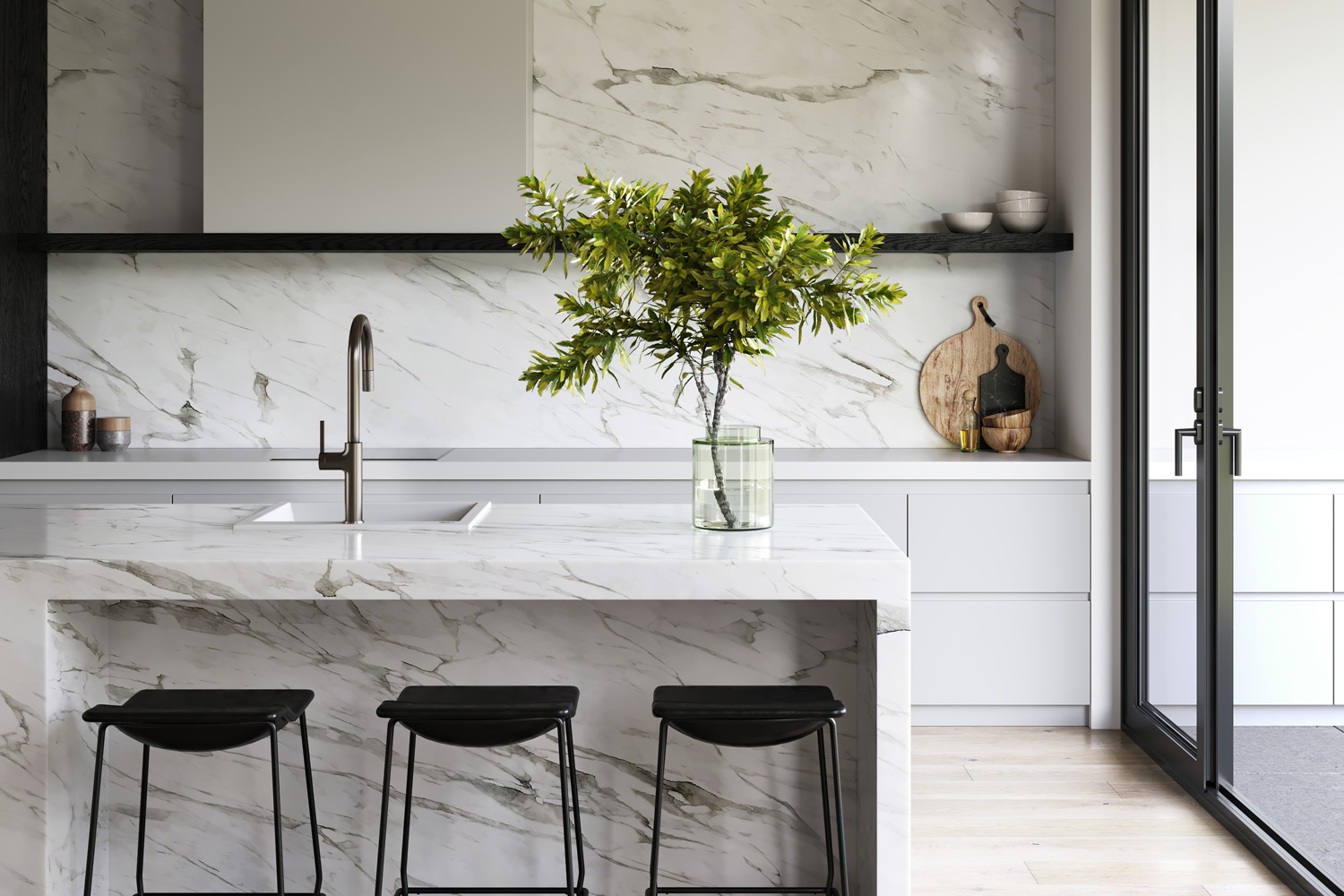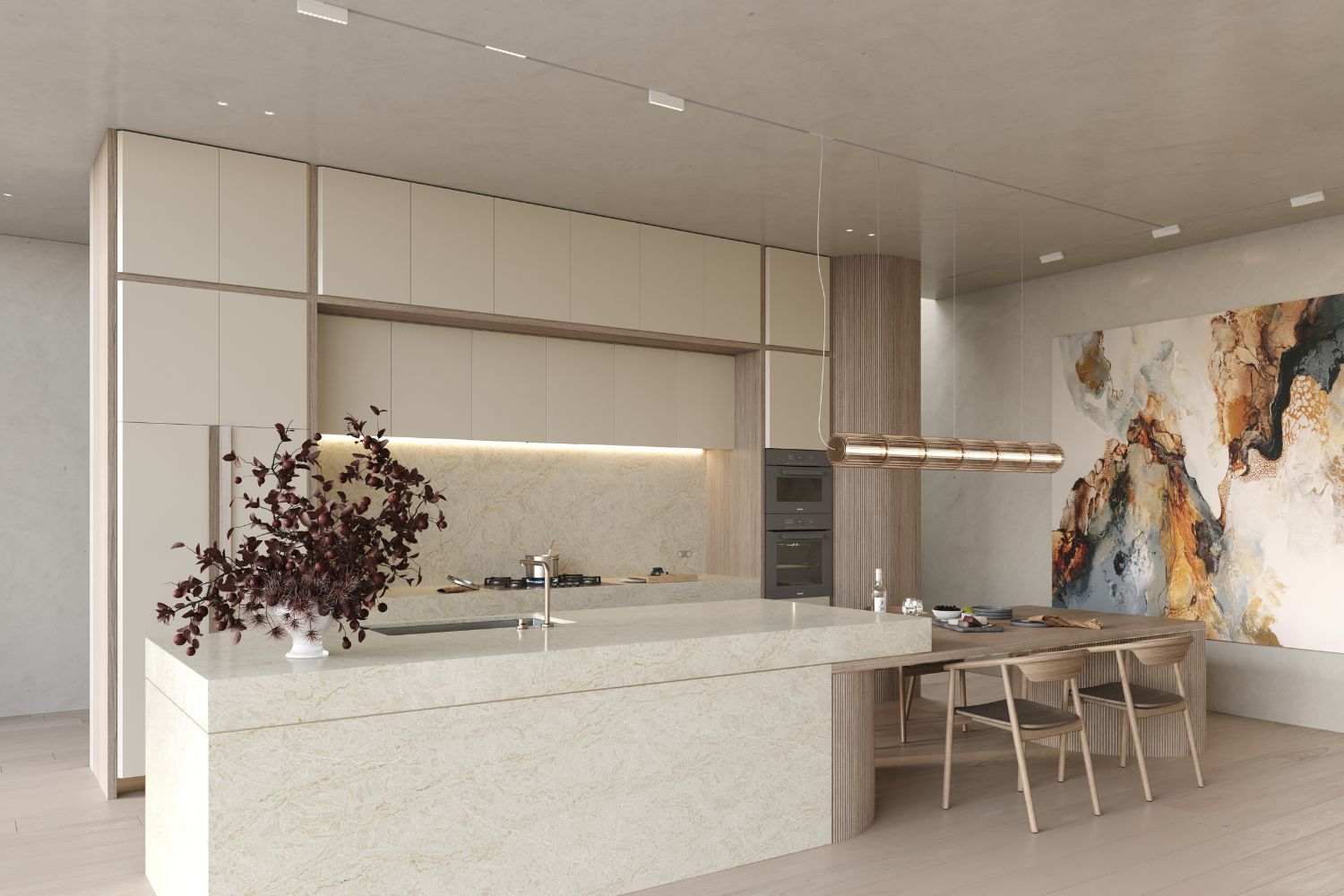
Modern kitchens are defined by inherent beauty and environmental kudos.
Words Carrol Baker
Today’s kitchens reimagine materiality, unique textures, light and spatial elements. They capture the spirit of the home, its essence and style. From a compact galley-style kitchen to a spacious, open-plan one, no home is stylistically complete without a kitchen that is both beautiful and functional.
Mick Moloney from Moloney Architects says the modern kitchen has become emblematic of the architecture itself. “It’s deeply integrated into the design of the building rather than treated as a fitted insertion,” he says.

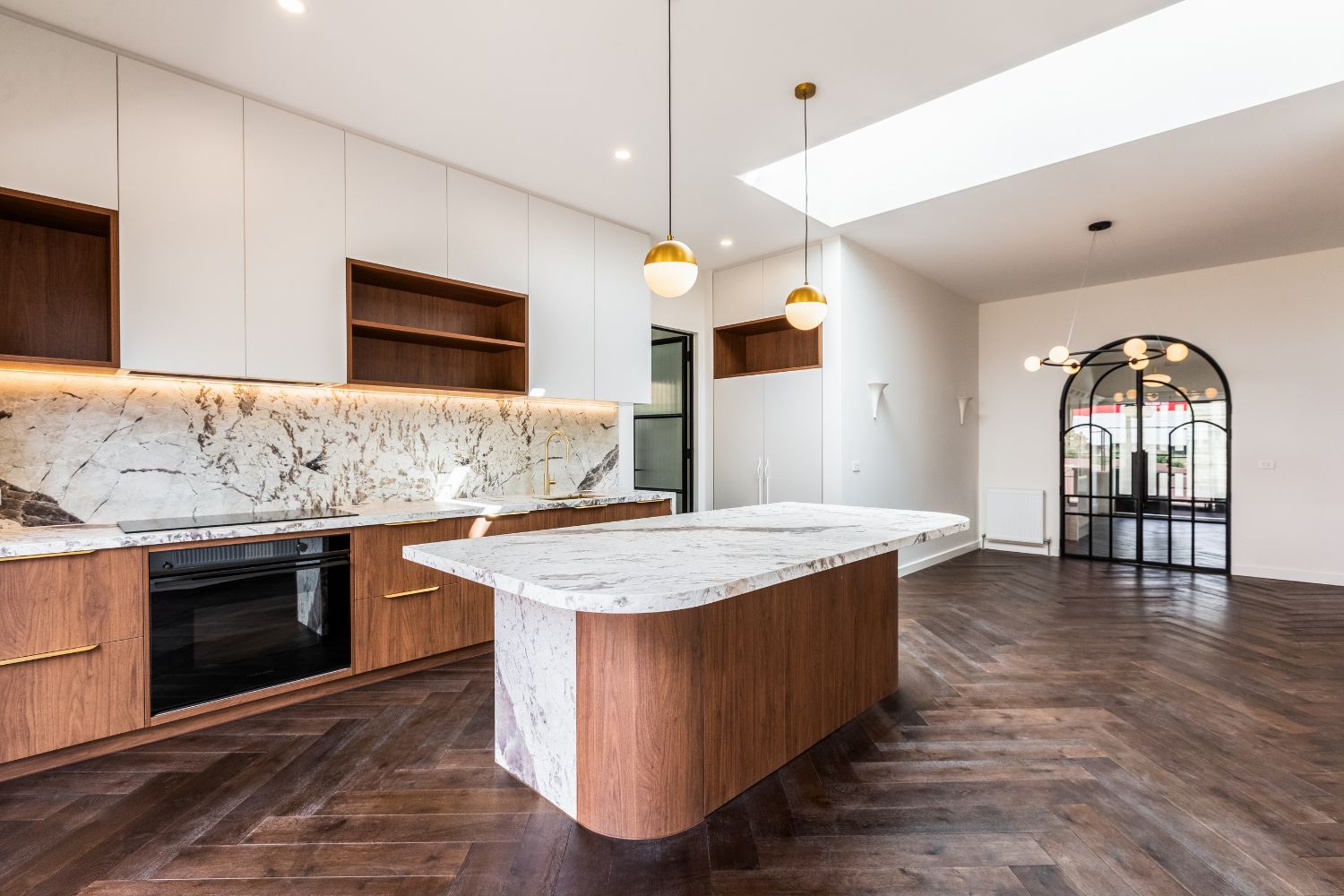
Colour, texture, shape and form are all important considerations when designing your kitchen. Linda Hannah, general manager of Marketing APAC Caesarstone, says these days, curves feature prominently in sculpted island benches, and natural stone and timber are highly popular. “Today we see colour and pattern, predominantly in warm, earthy hues,” she says. “But underlying all of these changes is one word — sustainability. It’s now a key consideration by designers and consumers when deciding on kitchen specifications.”
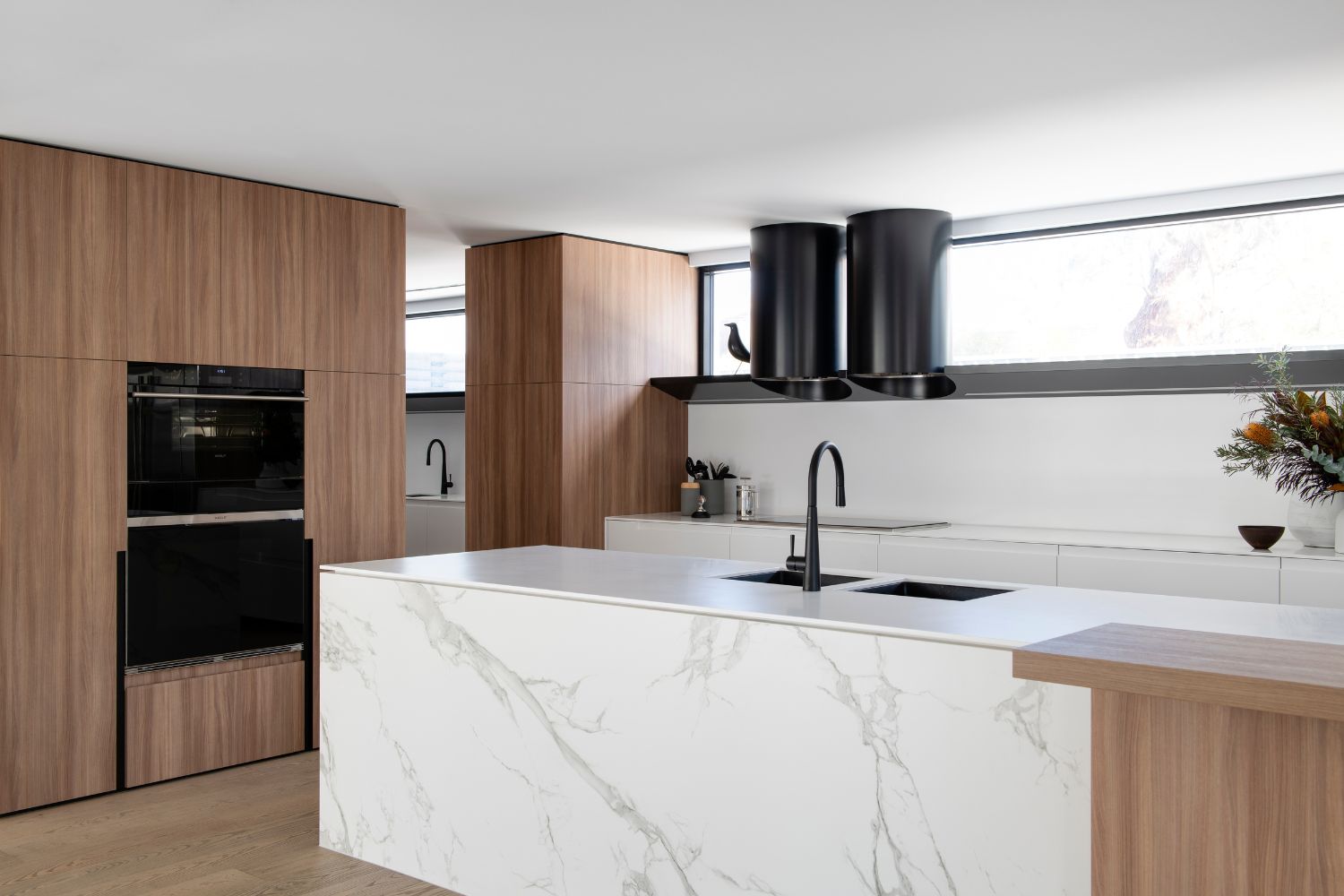
Performance is important, but so too is aesthetics. Mick says a cohesive look usually comes down to composition and material restraint, incorporating two or three materials, like timber, stone and a painted finish. “We tend to steer clear of dramatic splashbacks, bold stone veining or blingy feature handles,” he points out. “Spaces can quickly become visually noisy — a bit of restraint allows the architecture to take the lead.”

Materiality and colours need to work with adjoining spaces. Rachel Oakley, Laminex head of marketing, suggests identifying a focal point, like a tiled splashback, a pendant light or even the flooring. “Your final colour selection should be a holistic decision that balances the cabinetry, benchtop, splashback and paint colour,” she says.
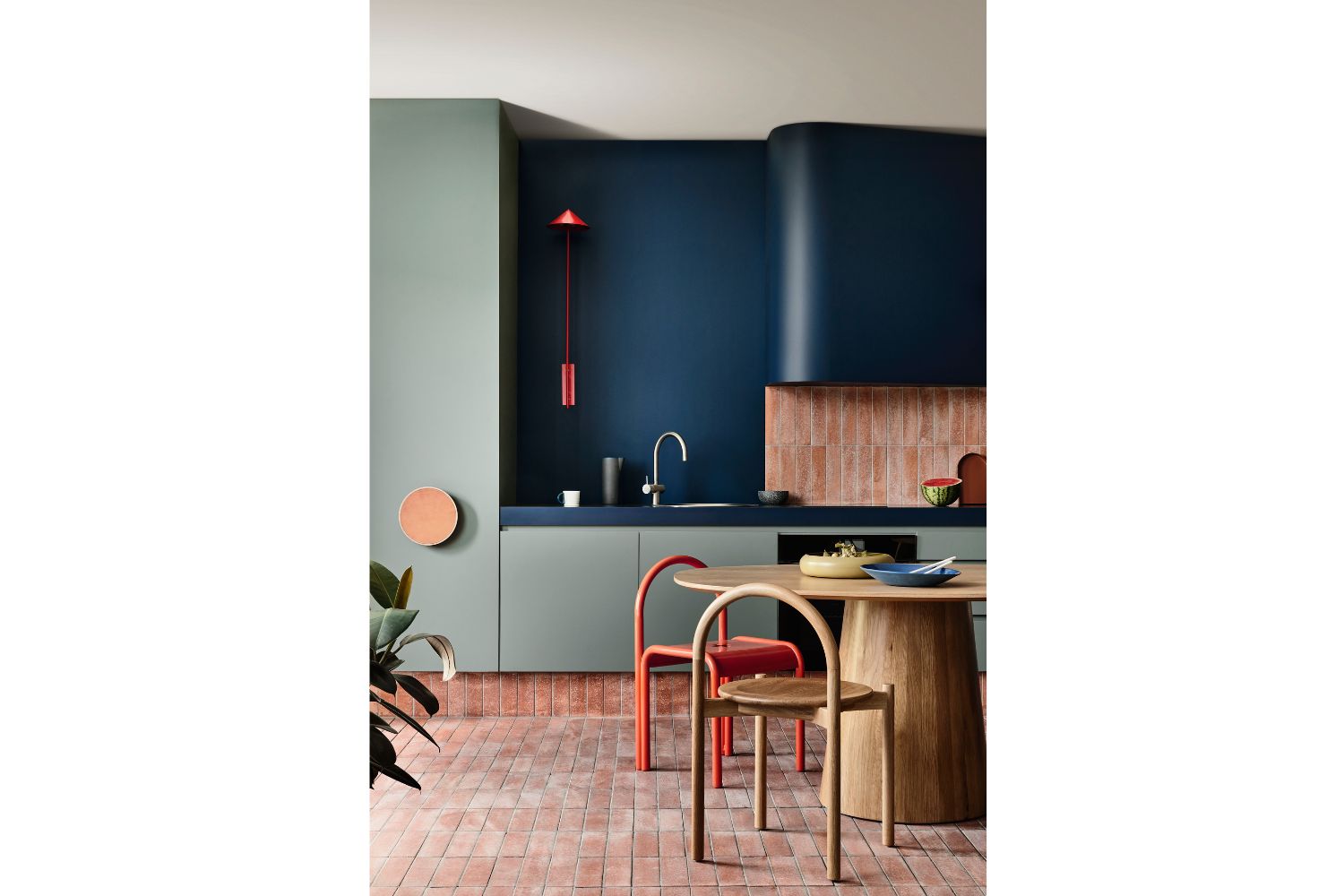
Forward-thinking homeowners are also introducing bold colour choices. “Bold, vibrant blues and rich greens add personality and adventure, while nature-inspired earthy tones like terracotta, sage and warm browns bring a grounded, tranquil feel to the space,” says Rachel.

This goes with that
Modern appliances not only make preparing and cooking easier, they also add beauty and style to a kitchen. The first microwave was introduced more than 50 years ago. The first rangehood was invented in the 1920s. Rachael Williams, national sales and marketing manager from Arisit, says modern capabilities, innovation and technology have revolutionised these everyday household appliances. “For example, the microwave’s function has gone from cooking and re-heating to defrosting, steaming, boiling, convection cooking and air frying,” she says. “Some have features like inverter technology, sensor cooking and multi-stage cooking.”
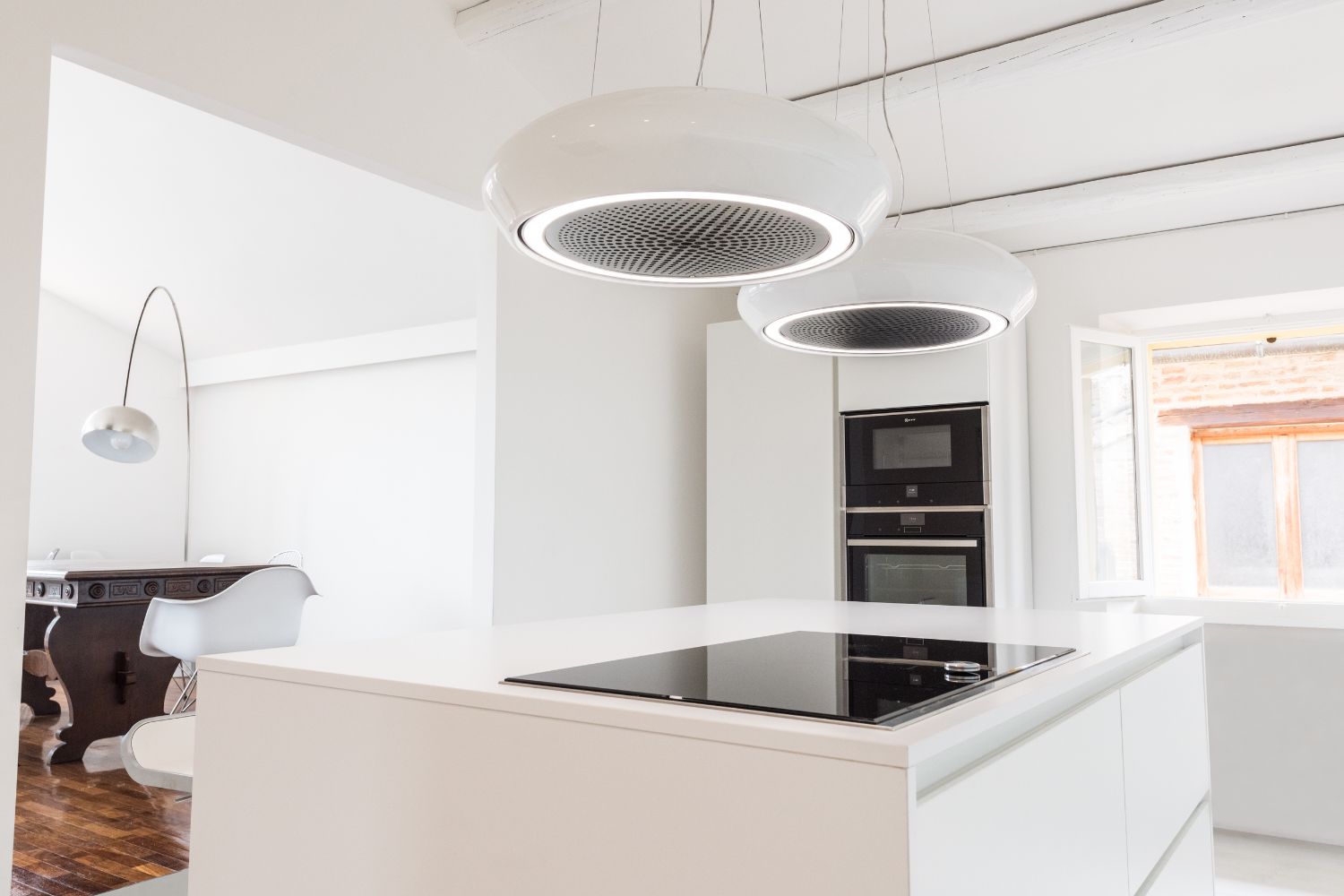
Rangehoods have also evolved. “Innovative technology offers features like heated panels to stop condensations, Wi-Fi compatibility to control the hood from anywhere in the home, and Bi-Power to control the power and increase energy efficiency,” notes Rachael.
Colour choices have also expanded. Some might choose to add a pop of colour with pink, blue, red or even a floral design on a small appliance — but for larger appliances, traditional stainless steel, white and black remain unbeatable.
Developments in appliances like rangehoods and cooktops can mean you might need to update. “Induction cooking is popular, but many don’t realise it cooks differently to gas or standard electric,” Rachael notes. “A ‘standard’ rangehood doesn’t do the job. Our Sirius Nera+ Collection of rangehoods is designed for induction with heated panels to eliminate condensation.”
New must-have appliances are those with multiple functions. “Appliances like our Valentina Allegra combines an induction cooktop and downdraft in one,” Rachael says. “Or the Whirlpool All-In-One microwave that’s also an oven, an air fryer, a grill, a steamer and more.”
Modern high-end kitchens also integrate some appliances for a more streamlined look. Mick says concealed appliances, integrated fridges and dishwashers, and dedicated appliance cupboards reduce visual clutter. “They allow the material language to remain consistent,” he says. “A cohesive kitchen doesn’t draw attention to individual feature items; it reads as one composed architectural space.”

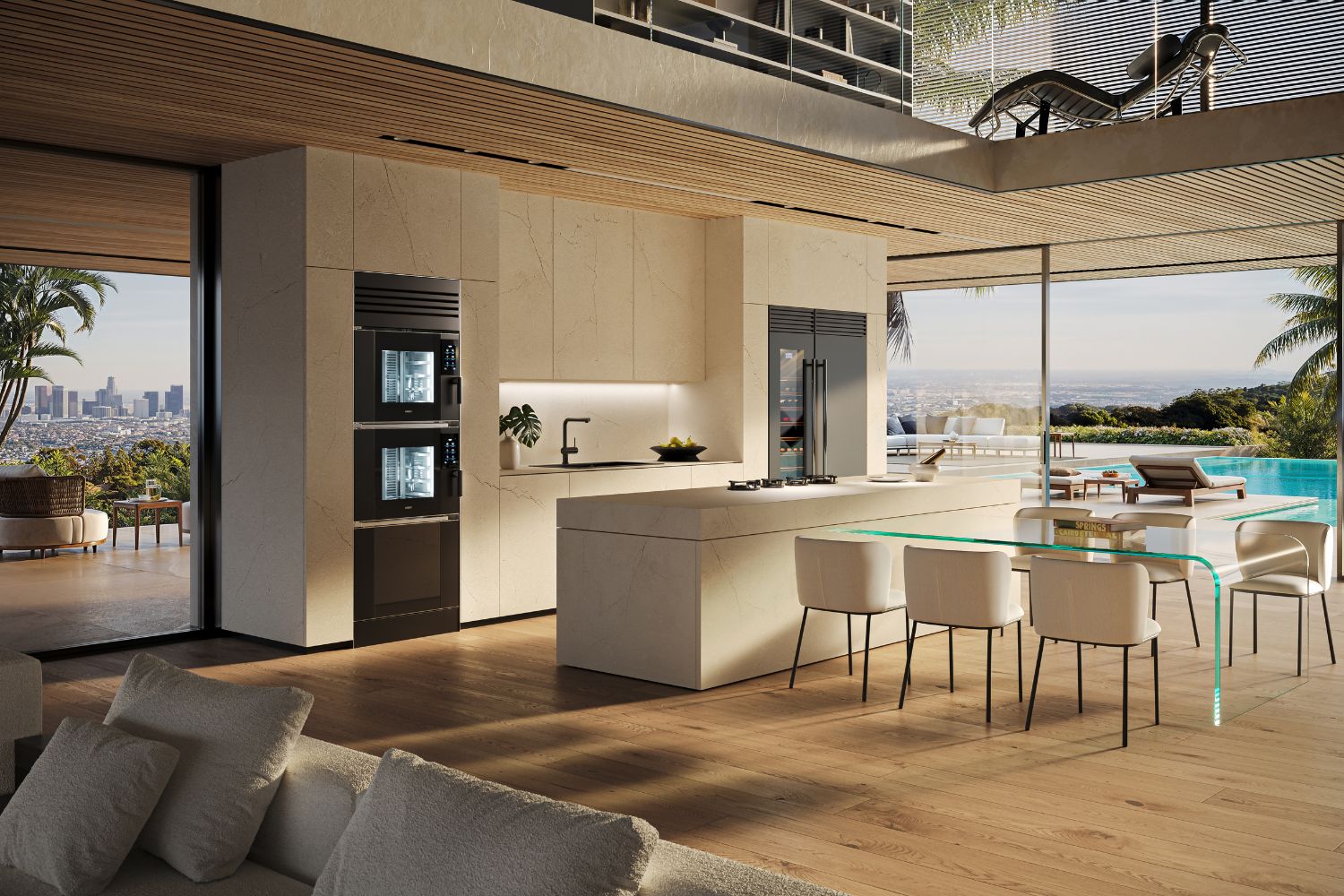
If the kitchen is the heart of the home, then the oven is the heart of the kitchen! For a truly show-stopping experience — and a mouthwatering one at that! — it doesn’t get any better than the Unox Casa SuperOven. The SuperOven collection consists of two models, Model 1 and Model 1S. Model 1 takes advantage of the power and versatility of two stacked ovens, while the more compact Model 1S features a single cooking chamber. SuperOven offers professional performance in a simple, immediate way, enabling cooking methods not found in traditional ovens, such as grilling, steaming, frying, smoking and dehydrating. Its user-friendly digital control panel allows activation of over 400 automatic cooking programmes.

Tag team
A kitchen with swathes of style, striking materiality and stunning appliances only works if it’s functional too. Mick says kitchens perform better when they are organised into three clear zones: social/preparation, cooking and clean-up. The social/preparation zone is typically the island. “We generally avoid placing a sink or cooktop here, keeping it visually calm and highly usable,” he says.
Mick adds the cooking zone needs adequate landing space either side of the cooktop, safe proximity to ovens and logical adjacency to key ingredients and utensils. “The clean-up zone runs along the services bench, with the sink, bins and dishwasher designed so the workflow is direct and efficient,” he adds.
A serviceable kitchen needs to have ease of access. Mick points out movement around the kitchen is critical, with clearance between island and services bench generally a minimum of 1000mm, ideally 1150mm-1200mm. “Any tighter and two people can’t comfortably pass, much wider and the kitchen becomes inefficient, requiring unnecessary steps back and forth during cooking,” he explains.
On the surface
The kitchen benchtop is arguably one of the most important aspects of your kitchen; it can add flair and cohesiveness. It also needs to be constructed with hardwearing materials. Belinda Worden from Austaron Surfaces says “solid surfaces” are particularly effective for solution-driven design. “They allow continuous transitions from the benchtop to wall, eliminating the need for silicone joints and grout,” she says. “This is particularly beneficial in areas behind sinks and offers an easy-to-clean-and-maintain surface.”

The diversity of solid surfaces like Staron makes them a standout. Belinda says their long-term performance and design flexibility means they’re highly desirable. “They perform exceptionally well as benchtops, but can also extend across walls, drawers and cabinetry for a cohesive finish,” she says. You can also use it to make seamless shower walls, custom shower trays, vanities, curved joinery and carved two-or-three-dimensional designs. You can even take them outside. “Solid surfaces are equally suited to alfresco environments, offering strong UV stability and resistance to wet weather,” adds Belinda.
Stone benchtops are also popular; marble, granite and limestone add warmth and elegance to a kitchen. Heat-resistant and versatile porcelain brings a sophisticated edge. Linda says the introduction of mineral and porcelain surfaces, such as Caesarstone ICON™ and Caesarstone Porcelain™, has been a critical point in sustainable surfaces. “Both are crafted from natural materials plus a high percentage of recycled materials, such as glass and water,” she notes. “Both are crystalline silica-free, completely stain resistant and never require sealing.”

An innovative material that’s taking the design world by storm is High-Pressure Laminate (HPL). Rachel says it’s easy for cabinetmakers to work with, allowing for a wide range of edge profiles — from clean square edges to bullnose across solid colours, woodgrains and mineral finishes.
“HPL allows for designs where the benchtop and splashback are created from a single, continuous curved piece,” Rachel says. “It’s this ability to move away from rigid, rectangular layouts toward more fluid, architectural shapes that is making it a preferred choice for custom kitchen designs.”
Tasteful tapware
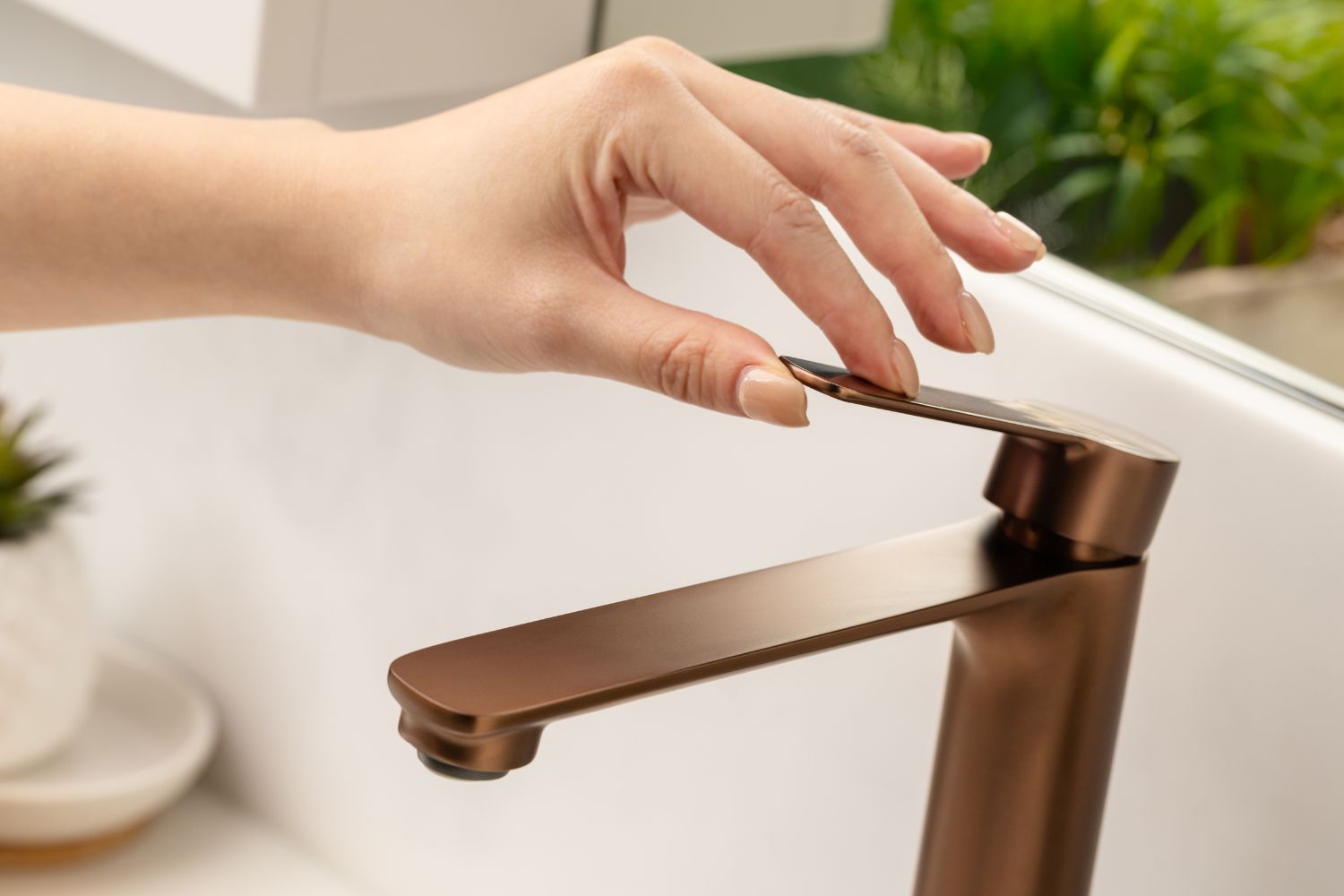
Elevate your kitchen with modern tapware. Whether you’re inspired by traditional looks, bold designs or innovation, new tapware aims to offer feel-good functionality and style. Luli Farrell, co-founder of ABI Interiors, says there’s a strong shift towards tapware that feels authentic and character-led. “Aged and antique-inspired finishes are gaining popularity as homeowners move away from ultra-polished minimalism and embrace spaces with warmth and personality,” she says.
But there’s also a resurgence of mid-century modern influence. “Square and more architectural tapware profiles are being reinterpreted with softer detailing and refined proportion,”
comments Luli.

Practicality comes to the fore with pull-out mixers and integrated filtration systems. “There’s also increasing demand for high-functionality designs like these, where performance is just as important as aesthetics,” explains Luli.

Of course, we can’t forget the kitchen sink. Luli says double-bowl sinks remain a practical favourite. “Farmhouse sinks are another popular choice, introducing character and a sense of craftsmanship, making them a natural focal point in both traditional and contemporary kitchens,” she says.
A must-have addition to your kitchen — particularly in compact or high-use kitchens — is the workstation sink. “Designed with built-in drying trays and compatible with accessories like colanders and chopping boards, they maximise efficiency and support a more seamless cooking experience,” says Luli.
Eye to the sky
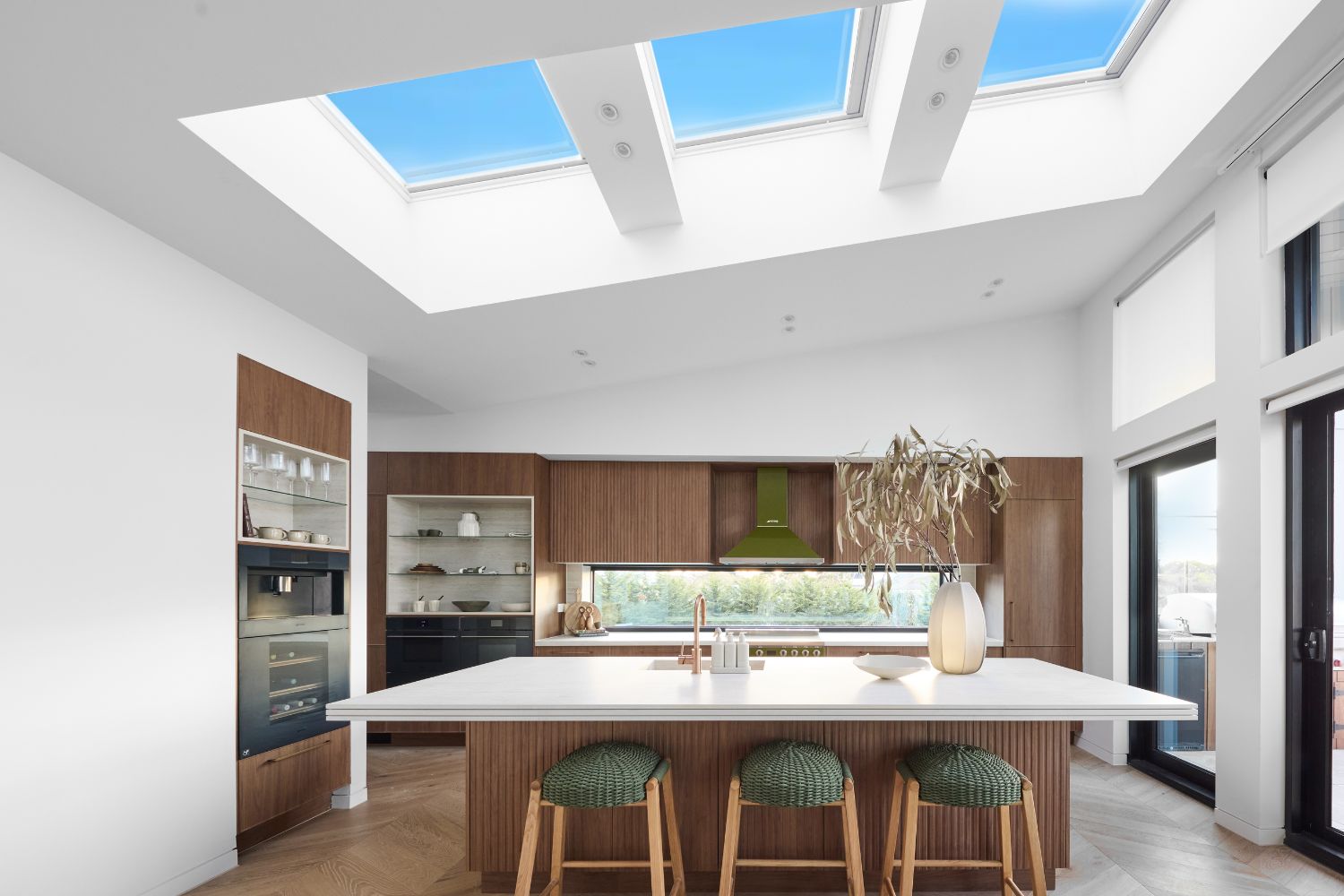
A well-placed skylight can add an abundance of natural light to your kitchen and dining space. Kristy Ryan, managing director Velux Australia/New Zealand and Japan, says a skylight has many benefits, including adding to vertical windows or freeing up walls and allowing for additional cabinetry and appliances. “They also support natural ventilation, helping release heat, steam and cooking odours, which is especially valuable in open-plan layouts,” explains Kristy.
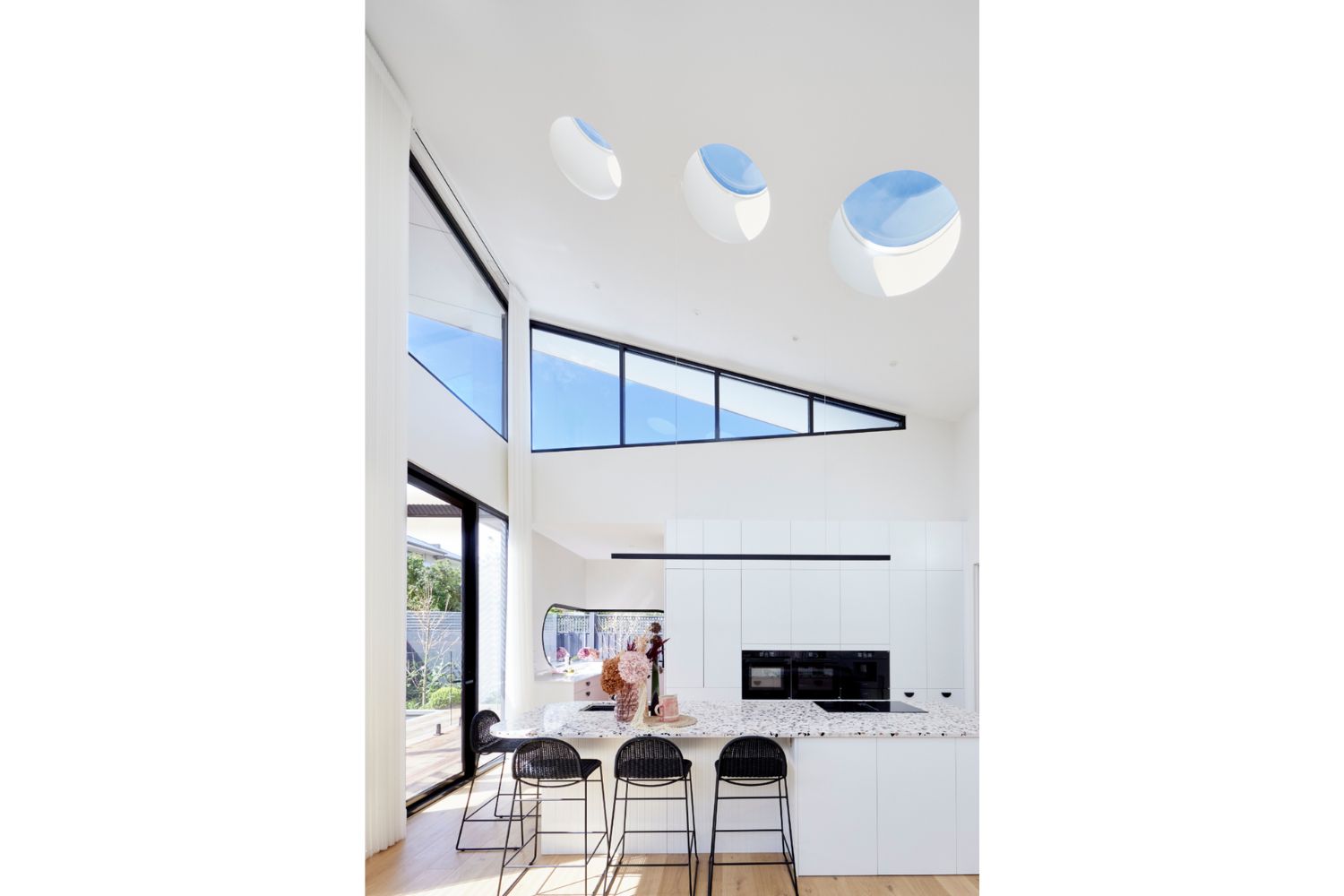
In terms of what’s popular right now, Kristy says clean, minimal forms continue to lead the way. “Large rectangular skylights remain the most common choice, but architects are increasingly opting for circular or oval openings to create an organic aesthetic,” she says.

Skylights not only serve to welcome in light; when strategically placed, they are also a design feature. “Using long, narrow formats can also create dramatic washes of light that make dining tables a focal point,” explains Kristy. A well-placed skylight offers energy savings and can have health benefits, particularly if it’s a high-quality operable model. “As hot air rises out of the roof, it takes pollutants with it and draws in fresh air from the outdoors,” she explains.
A skylight can also boost indoor/outdoor connectivity. “Skylights help improve the connection to nature through glimpsed treetops, moving clouds or shifting daylight, which subtly enhances wellbeing and adds a sense of calm to busy household spaces,” enthuses Kristy.

This article was originally published in Grand Designs Australia #15.1.