There’s plenty in new-look family-friendly kitchens and bathrooms to get excited about. Innovative designs, easy-clean surfaces and cutting-edge storage solutions are just the beginning
Words Carrol Baker
If you are planning a new kitchen or bathroom, there’s a lot to consider. What shape kitchen will serve your family’s needs? Where will your shower, bath and vanity go? What workspaces and storage will be practical additions? Materiality is also important. It needs to be robust enough to withstand the rigours of family living, easy to keep clean, easy to use, and of course safe.
All this needs to be packaged up in an ergonomic design that also ticks the box for aesthetics. Your family kitchen and bathroom need to work well and look good, too. Functional family kitchens and bathrooms really are the sum of all their parts. So if your family kitchen and bathroom spaces aren’t up to scratch, it’s time to update.
Open and shut
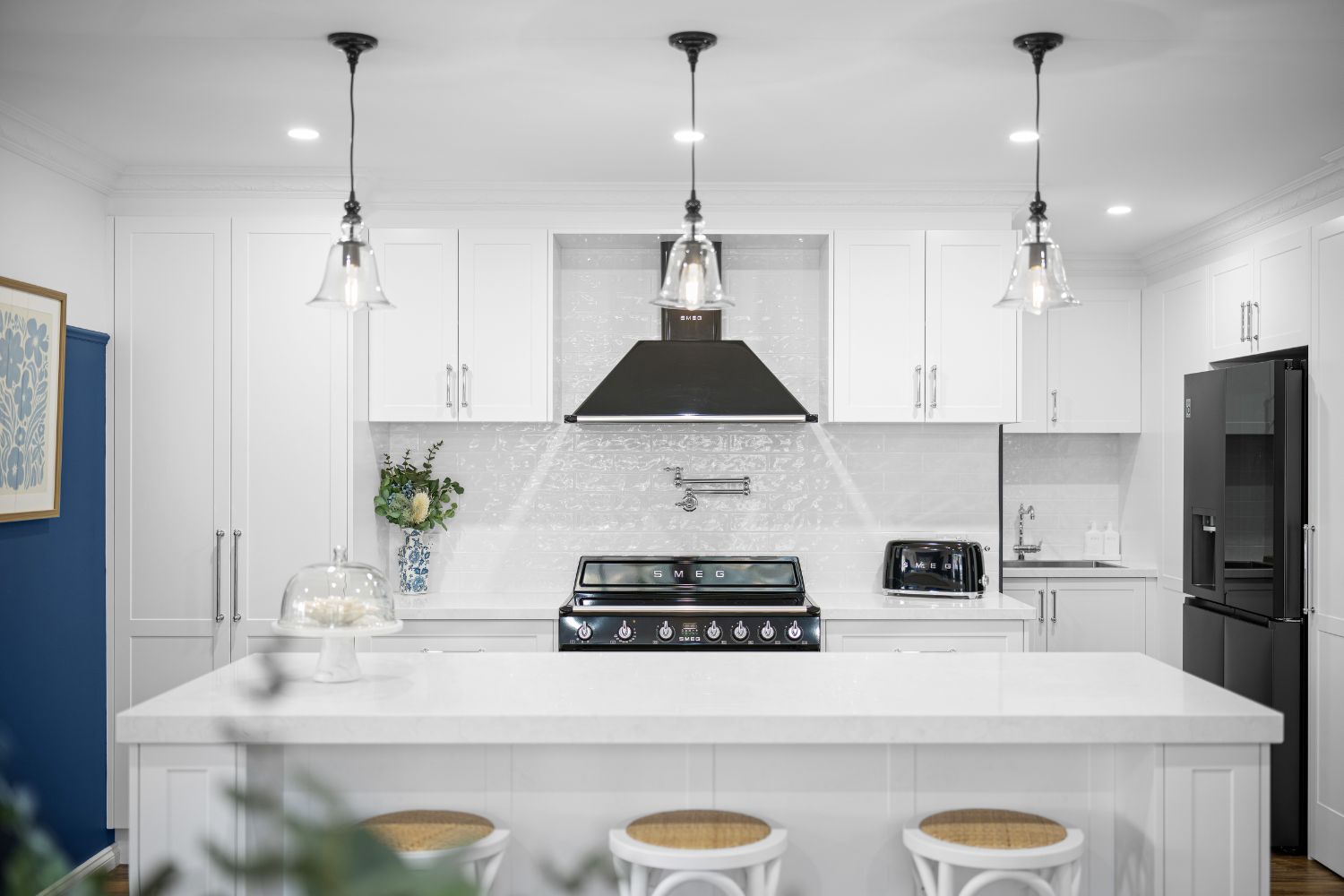
An open-plan kitchen is a great option for families for a host of reasons. The open-plan layout is spacious and also easy for those in the kitchen to move around to access appliances. Anders Lawaetz from Seabreeze Kitchens says we’ve come a long way with the family kitchen over the past few decades.
“Modern kitchens are very different from 30 years ago, where poor mum was stuck in a room out back,” he says. “These days, with an open-plan kitchen, whoever is cooking can still be part of family activities – chatting over breakfast or helping kids do homework while cooking.”
Another family-friendly layout is the galley-style kitchen, adds Anders. “You can still have this option with an open plan and with an island. There’s ease of access – it’s very user-friendly,” he notes.

Position perfect
Versatility is key when designing a family kitchen. David Mitchell from Kitchens U Build suggests making the space as functional and easy to use as you can. “Simple things such as ensuring your bins are within easy reach of food prep spaces can make a huge difference to the flow of your kitchen,” he suggests.
David adds that the layout of your kitchen space should reflect the way you use it. “If you love cooking up a storm, then ensuring the fridge, ovens, cooktops and the kitchen sink are accessible from one spot will make preparing meals easy,” he says.
“If your kitchen is where the family gathers to chat and relax, then think about dividing your space into sections: one for eating, one where everyone can sit together, and one for cooking.

Corral the clutter
A butler’s pantry can be anything from an appliance and pantry storage space to a second full kitchen tucked out of sight. If you have a large family or love to entertain, a butler’s pantry is a fabulous idea.
Storage can be a mixture of open shelving, deep shelving, and also shallow shelving to access everyday items. As well as ample storage, a second sink reduces mess in the main kitchen space. If you have the space and budget, add a cool room. It keeps produce at the optimum temperature level and is a great idea for large families.
Island living
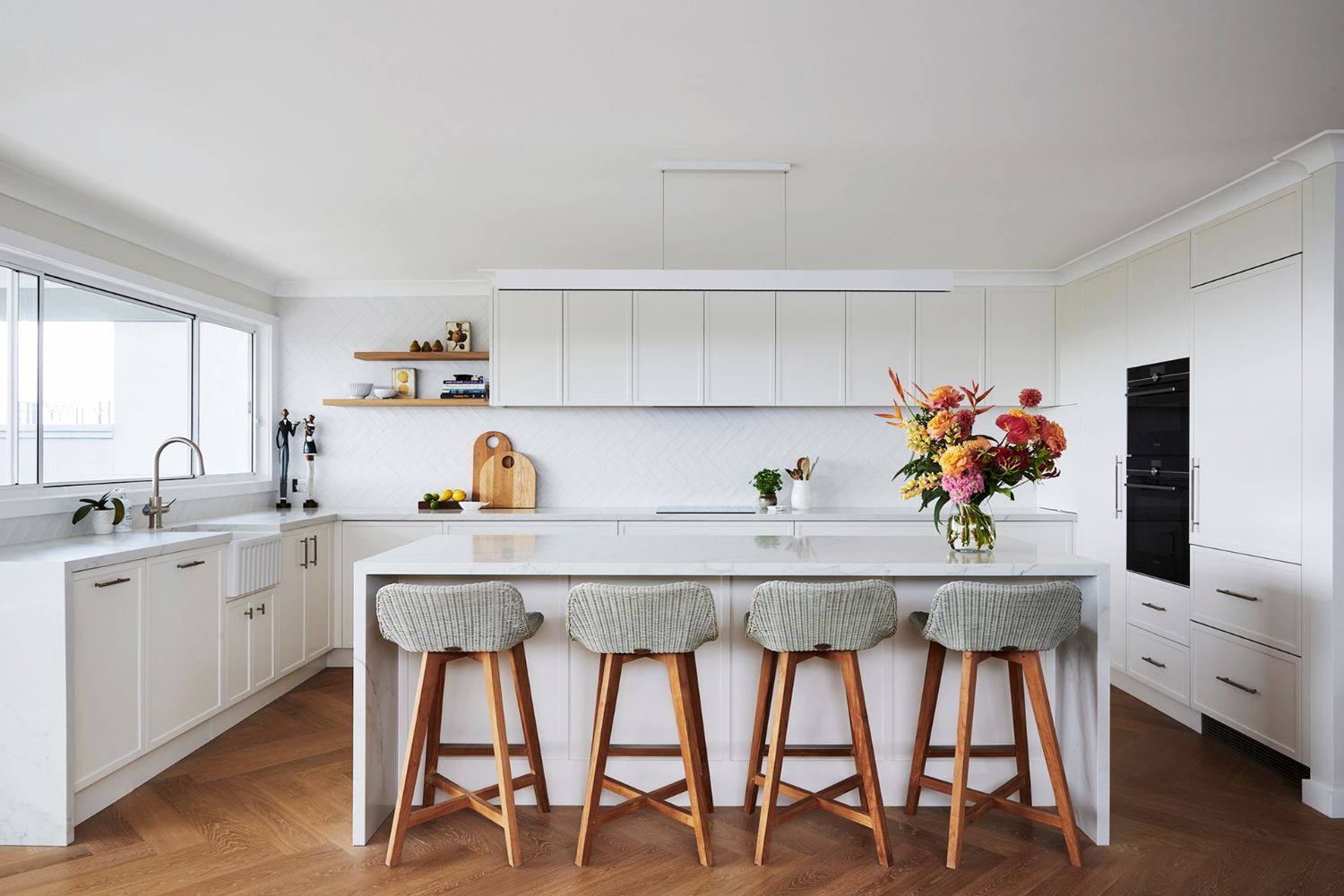
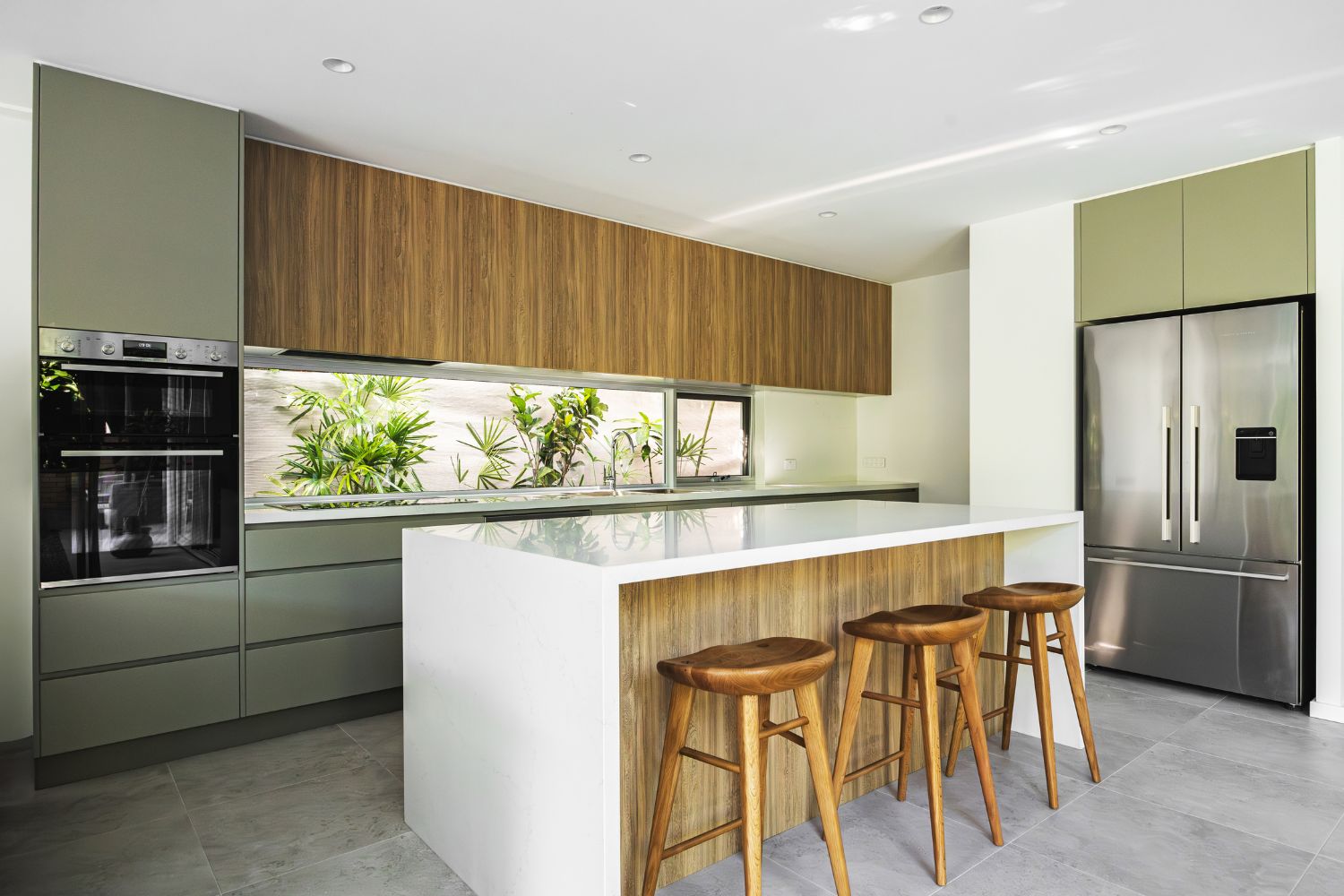
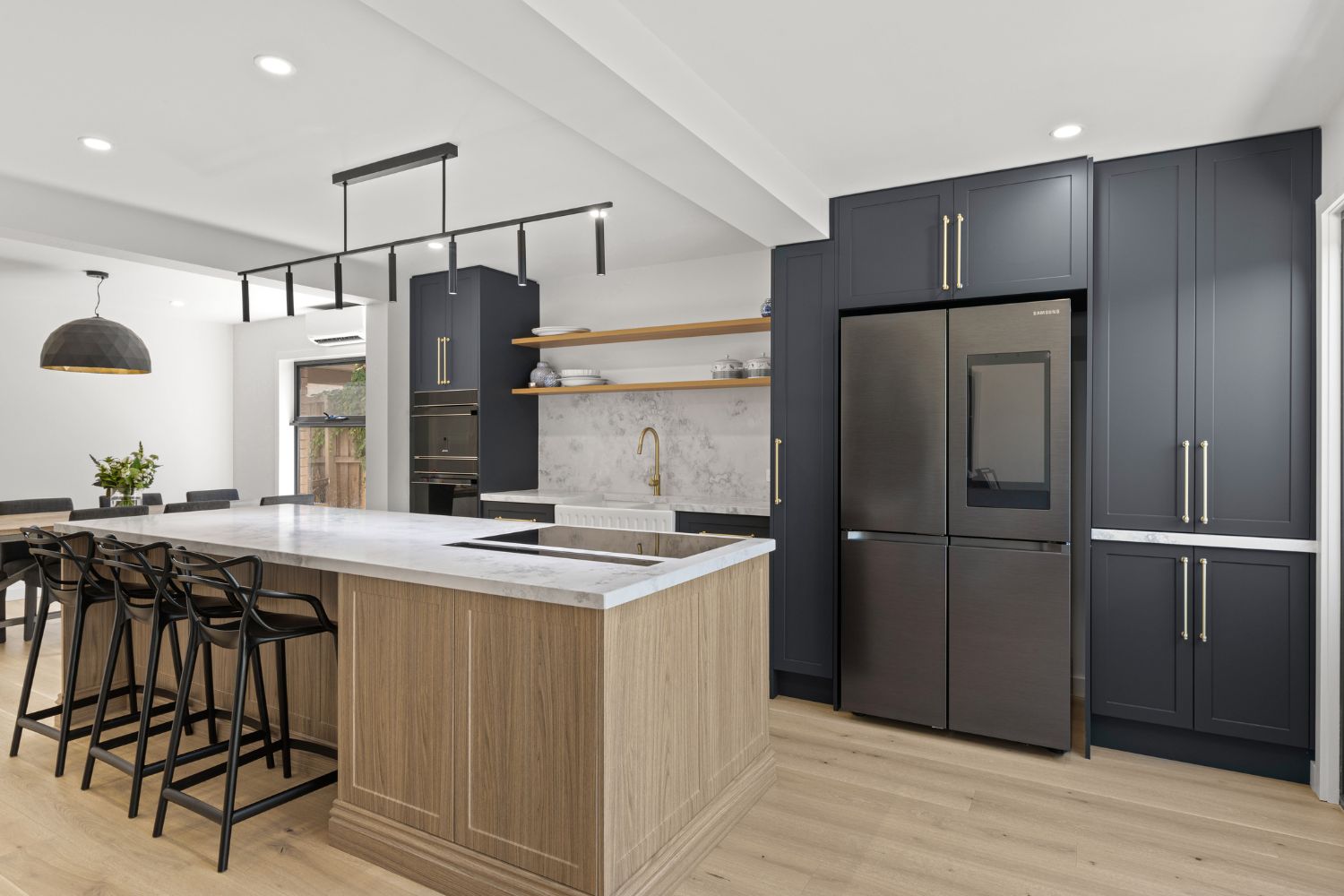
The kitchen island is a family-friendly addition, which is a must-have if space permits. David says the island is often the true heart of the home. “It’s an area that not only has to look great, but be functional as well,” he notes.
For the ultimate kitchen island layout and inclusions, David says to ensure it’s designed to work for many different situations. “Make sure you’ve got plenty of storage space to keep everything in its proper place, giving you easy access to items when you need them,” he advises. “You’ll also want uninterrupted bench space on your island for versatility, so including deep drawers, hidden storage or pull-out recycling stations can help you keep your island clear of clutter.”
It’s also important to include conveniently placed power points, adds David. “This ensures you’ve got the power you need for your kitchen appliances as well as the kids’ computers, making your island the place to be for everyone.”

Built to last
Durability is key for a family kitchen; whatever materials you choose, you want them to last. Select those that are durable and minimal – stone, engineered stone, and solid-surface benchtops are scratch- and chip-resistant. Stainless steel is another product that will wear well and is easy to clean. Opt for cupboard doors with profiles designed to withstand impact, and satin-finish cabinetry as it will hide finger marks.
Kitchen safety
When designing a family-friendly kitchen, safety is paramount. Anders says curved benchtops are a great idea. “It will have a softer impact if a small child runs into one; they’re very popular at the moment,” he shares. Instead of cupboards, choose drawers as items are less likely to fall out. Drawers also offer maximum storage potential – there’s no wasted space with deep dark corners of cupboards you can’t access.
For flooring in kitchens and bathrooms, choose textured non-slip surfaces such as concrete, or textured floorboards. Avoid highly polished tile surfaces.
When designing a family kitchen that’s practical and child-friendly, there’s more than safety issues to consider. Offering solutions so your tribe can grab brekky on the go is a great idea for busy mornings. Helle Olsen from Collaroy Kitchen Centre suggests setting up a breakfast station: “Design an area where bowls, breakfast cereals, bread and toaster are kept so that when children are old enough, they can grab their own breakfast.”

Anders also suggests creating a kids’ play area in the kitchen. “They can have their own plastic utensils and bowls in their own little drawer, and adults can keep an eye on the kids while preparing meals,” he adds.
If your little one is a budding chef, you can also get them involved by giving them a step up. “If they can stand on a small stool, young children can feel like they’re part of the cooking process,” says Helle. And with a step stool, they can also “help” with the washing up afterwards.
Bathing beauties
Bathtime with kids is where magical memories are made. But bathrooms are also spaces where slips and falls can occur, where water can scald little ones, and where mess and grime can accumulate.
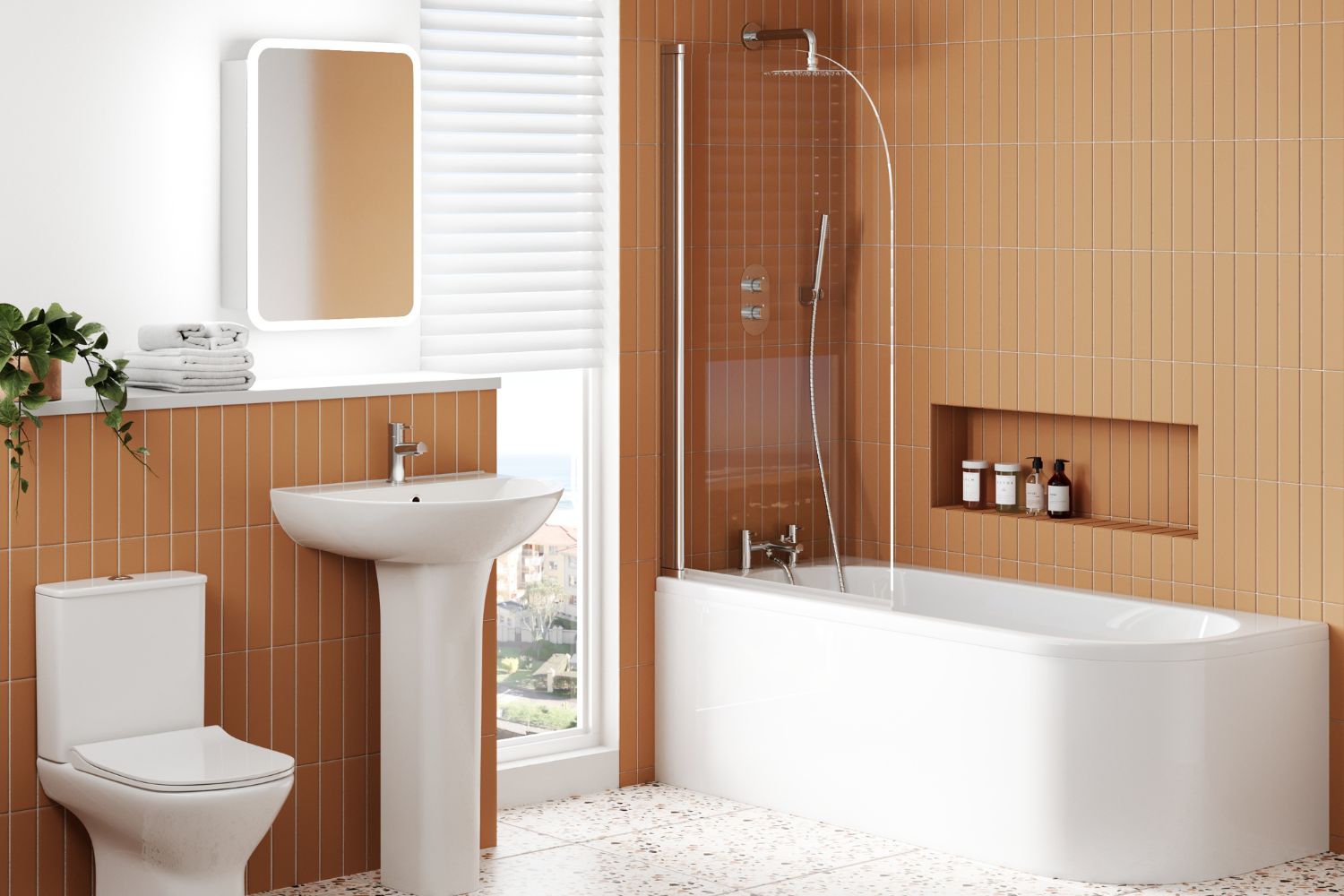
In the bathroom, Helle suggests installing childproof locks on cupboards storing medicines, razors or cleaning supplies. Your tapware selection is also important. “Single-lever taps are easier for kids to use,” notes Helle. To prevent accidents and scalding, add a thermostatic mixer. Anders explains that these set water flow at a constant temperature, so it reduces the risk of scalding. “They aren’t used a great deal in Australia, and they should be. In Europe it is the norm,” he says.

Creating safe bathroom spaces that are easy to clean means peace of mind and more time to spend with your family. Anders says how you design your bathroom from the get-go has potential safety and useability repercussions. “I try to design a bathroom with wet areas away from the door; that way you can walk in and wash your hands without getting wet feet,” he says. With multiple users in a family bathroom, positioning the toilet close to the door also makes good sense. “It will be used a lot during the day – the shower and bath less so,” adds Anders.

When designing a bathroom that will have multiple users, storage space is at a premium. Helle suggests a recessed mirror cabinet with shelves for small items such as electric toothbrushes and toiletries. It’s up high so small inquisitive fingers won’t be able to reach medicines.
Your choice of bathroom vanity is an opportunity to add ample storage. Helle says it’s a good idea to pick a vanity with drawers. “Preferably at least one drawer for each person for bigger items such as hairdryer and straightener,” she suggests.
Bathrooms that shine
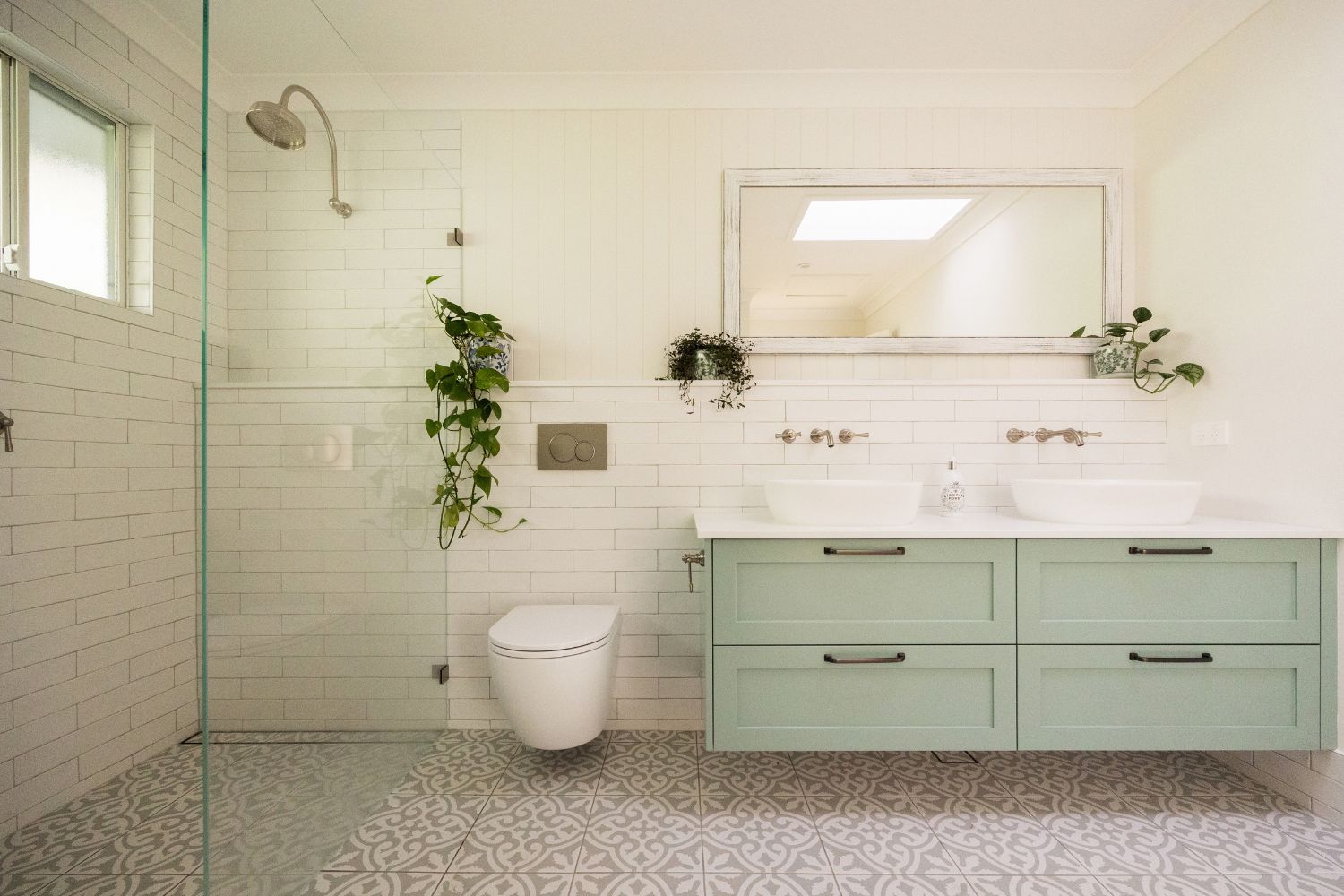
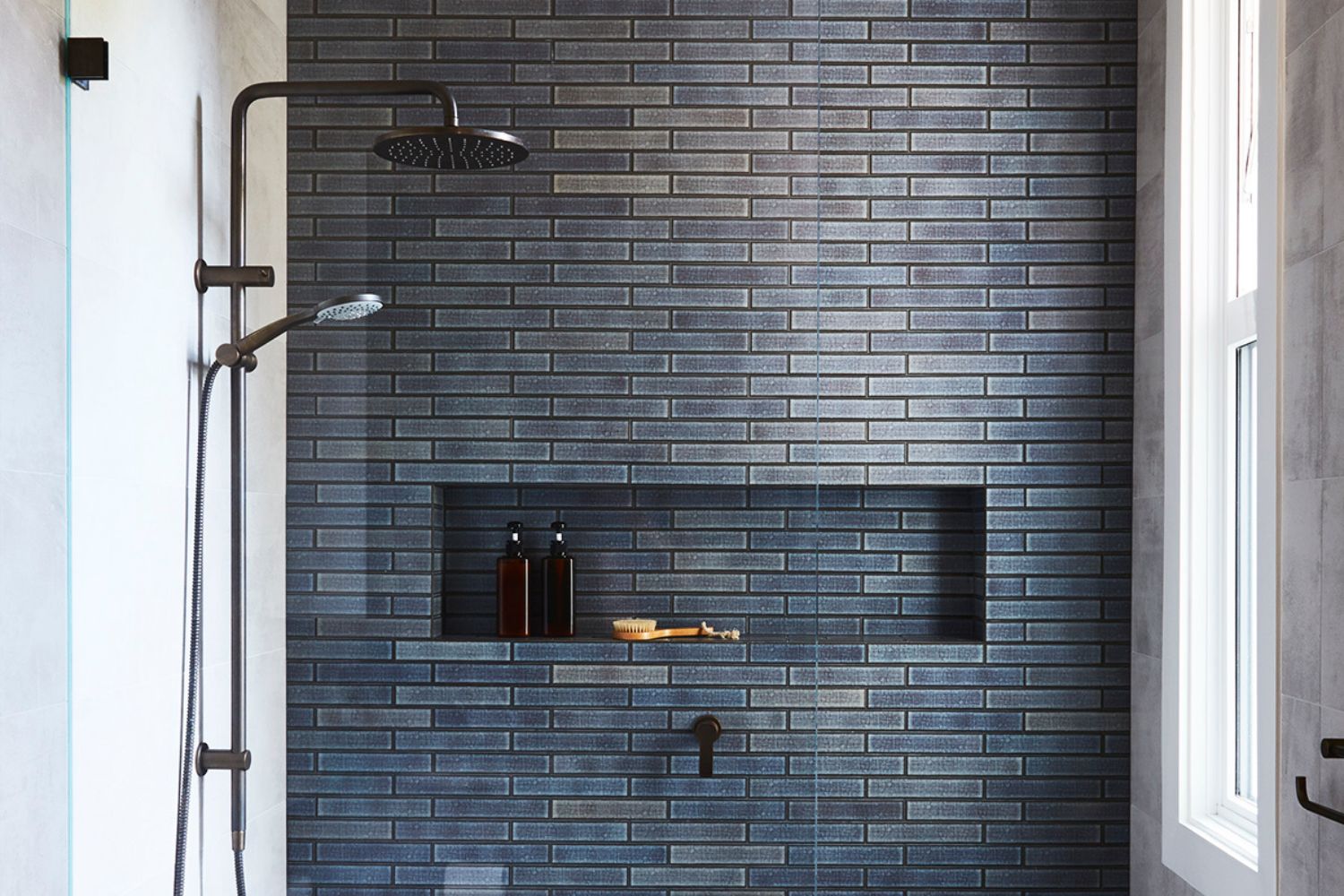
In the bathroom, the tiles that you use are important – opt for textured tiles to reduce slip hazards. Larger-format tiles are also good options, according to Helle, as with larger tiles there’s less grout. She also advises using a gloss or semi-gloss finish as matt tiles are very hard to keep clean.
Floating vanities and toilets will also help reduce cleaning time as they are easy to clean underneath. A sparkling-clean shower screen is always desirable, but it doesn’t take long
in family bathrooms for them to get dirty. Helle’s suggestion: “Treat shower screens
with EnduroShield as it repels water, soap scum and grime.”

Full house
Over the past decade or so, the dynamic of Australian households has undergone a delicate shift. Taking their cue from Asia, Africa and Latin America, where it’s common for different generations of families to live under one roof, more and more Australian families are following suit.
Multigenerational living means catering for the young and the elderly under one roof. For the elderly, a bench seat positioned at one end of the shower can make bathing easier. When designing your bathroom, factor in your future needs too as it will make retrofitting devices easier. Make sure there is provision for grab bars, and wide access for doorways.
If possible, design your bathroom with a heated floor for comfort – there’s nothing like stepping out of a steaming shower onto warm flooring on a chilly winter morning. “It also keeps things dry and is the best form of heating for a bathroom,” advises Anders.
This article was originally published in Kitchens & Bathrooms Quarterly #32.2